Google Beijing: Project Backpack (校园 背包客)
Google, 2007 · Case study by Will Dzierson
Tags: UX, Software Development, TypeScript
My contribution
I served as lead designer and co-research lead for the full three-month engagement. Alongside research partner George Zhang, I designed and ran a field research program that included in-person interviews, contextual inquiry sessions, and cultural immersion visits at Chinese university campuses — including a dedicated mini-immersion at Chongqing University to capture the distinct dynamics of Tier 2 city student life.
I synthesized field findings into a structured insight framework and led a cross-functional workshop with the Google Beijing team to generate product concepts from the research. I then owned the design and narrative development of the final concept portfolio, producing interaction concepts, scenario illustrations, and a product brief that translated student behavioral insights into actionable design directions for Google's China product teams.
The work
In 2010, I was asked to head to Beijing for an extended, three-month project with two distinct aims: supplement and mentor the relatively junior Google Beijing design team, and propose a product initiative that might meaningfully move the needle on Google's fledgling presence in China. At the time, Google was a distant fourth or fifth in brand recognition against deeply entrenched native incumbents like Baidu — and the challenge of winning Chinese users over wasn't just a marketing problem, it was a product problem.
I spent much of the engagement in the field alongside my research partner, George Zhang, conducting immersive research with Chinese university students across Beijing and Chongqing. We spoke at length with students about their hopes, fears, dreams, and desires — particularly through a technological lens. The research took us into dorm rooms, cafeterias, campus common areas, and computer labs, building a textured picture of how this demographic actually lived, communicated, and accessed information on the go.
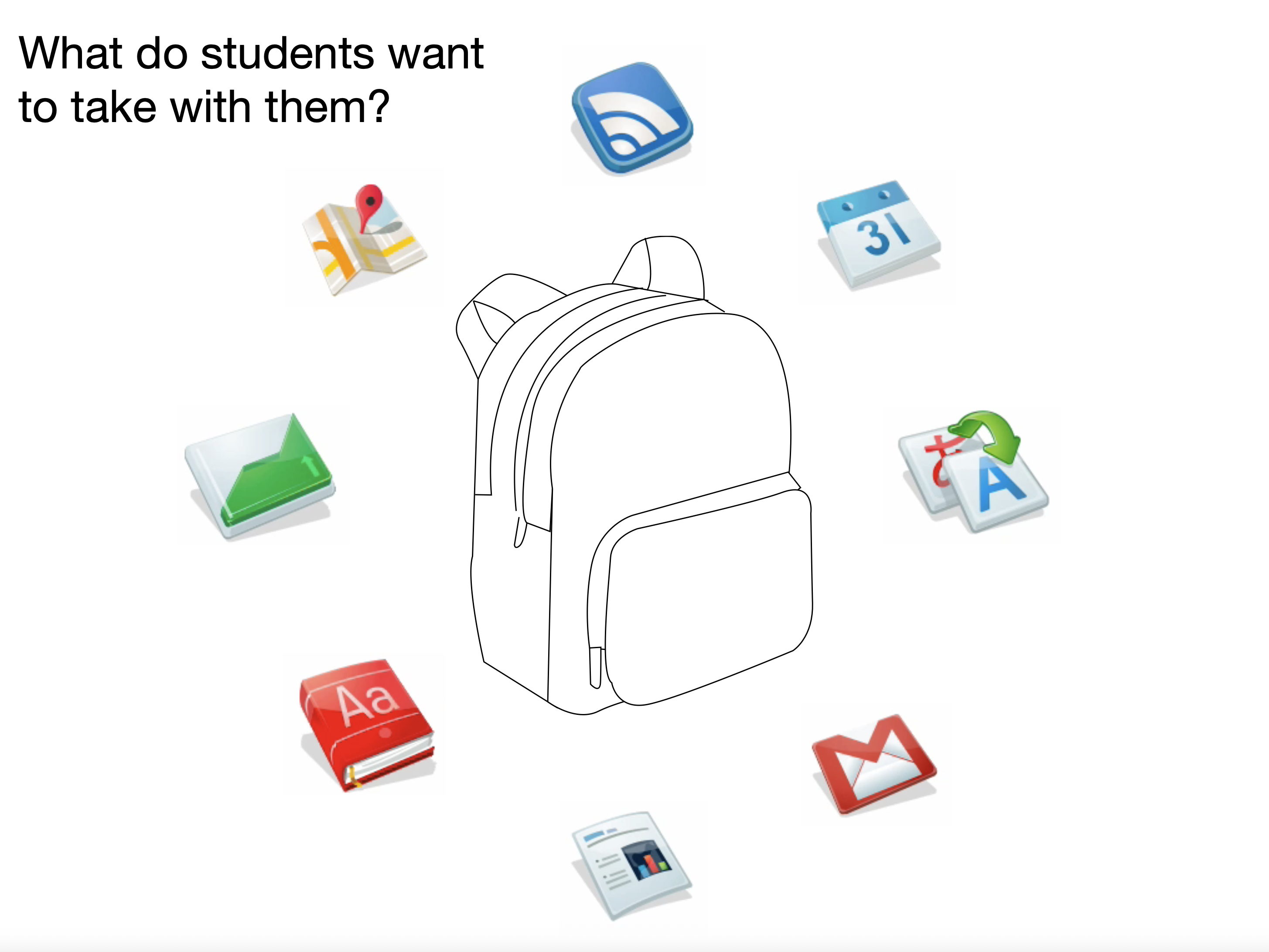
We named the initiative Project Backpack (校园 背包客) because the central question driving our design work was: what would make students want this product with them as constantly and instinctively as their backpack? We chose university students deliberately — they were the most favorably disposed cross-section of Chinese internet users at the time, tech-savvy and mobile-forward, and represented a high-leverage opportunity for Google to build loyalty before habits fully calcified around competing platforms. The output was a concept portfolio and product brief that drew directly from our field research, framing a set of experiences tailored to the real constraints and aspirations of Chinese student life.
Images and video
- The Project Backpack brief — cover slide from the original research presentation, credited to Will Dzierson (design) and George Zhang (research), July 2009. The illustrated student figures became the visual language throughout the project.
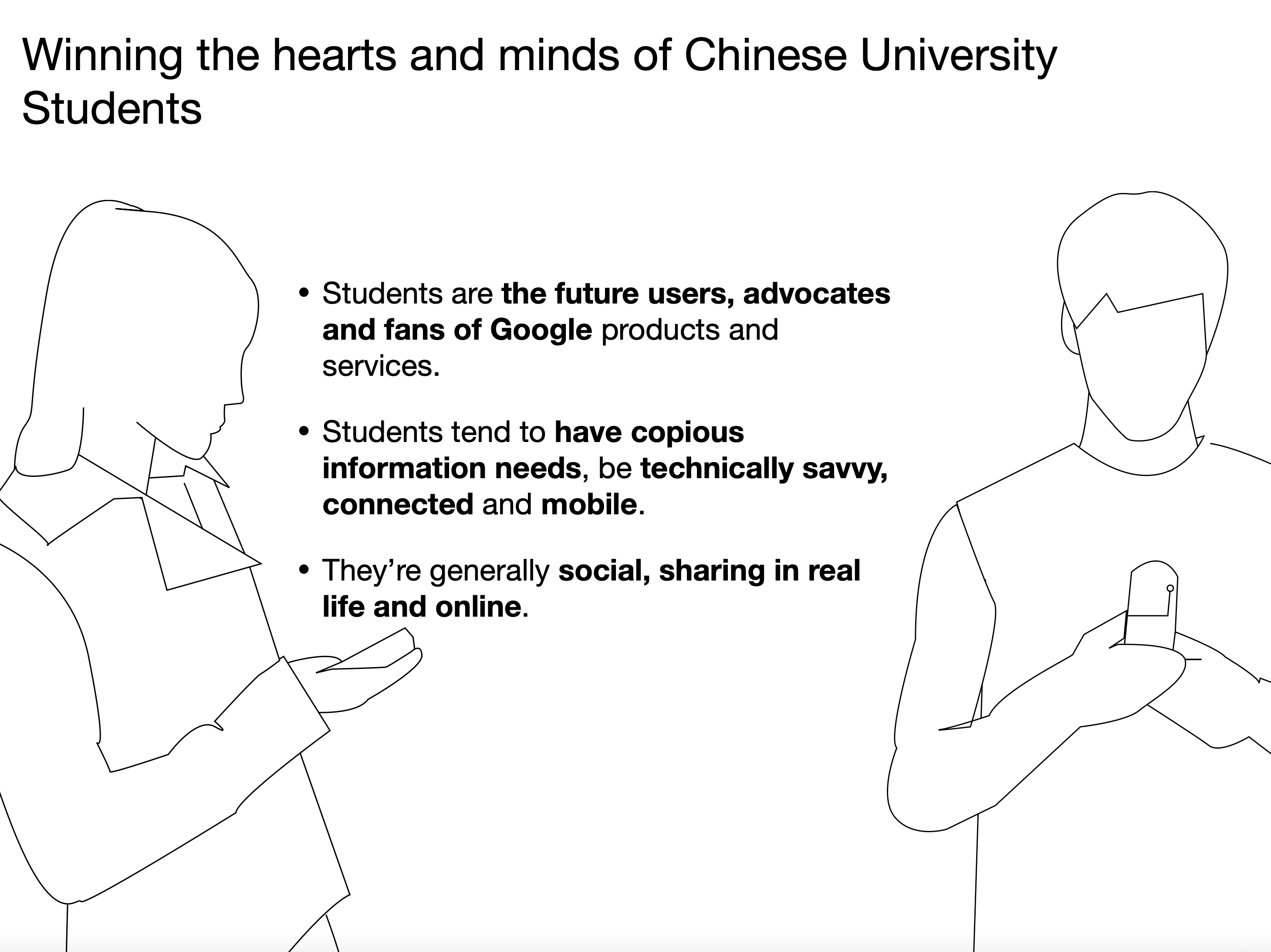
- Research framing slide: why we focused on university students as the target audience — future Google advocates with high information needs, strong mobile behavior, and deeply social sharing habits.
- The core design question visualized: what would students want to carry with them as instinctively as a backpack? Google apps — Maps, Calendar, Gmail, Translate, and more — orbit an empty bag waiting to be filled with the right experiences.
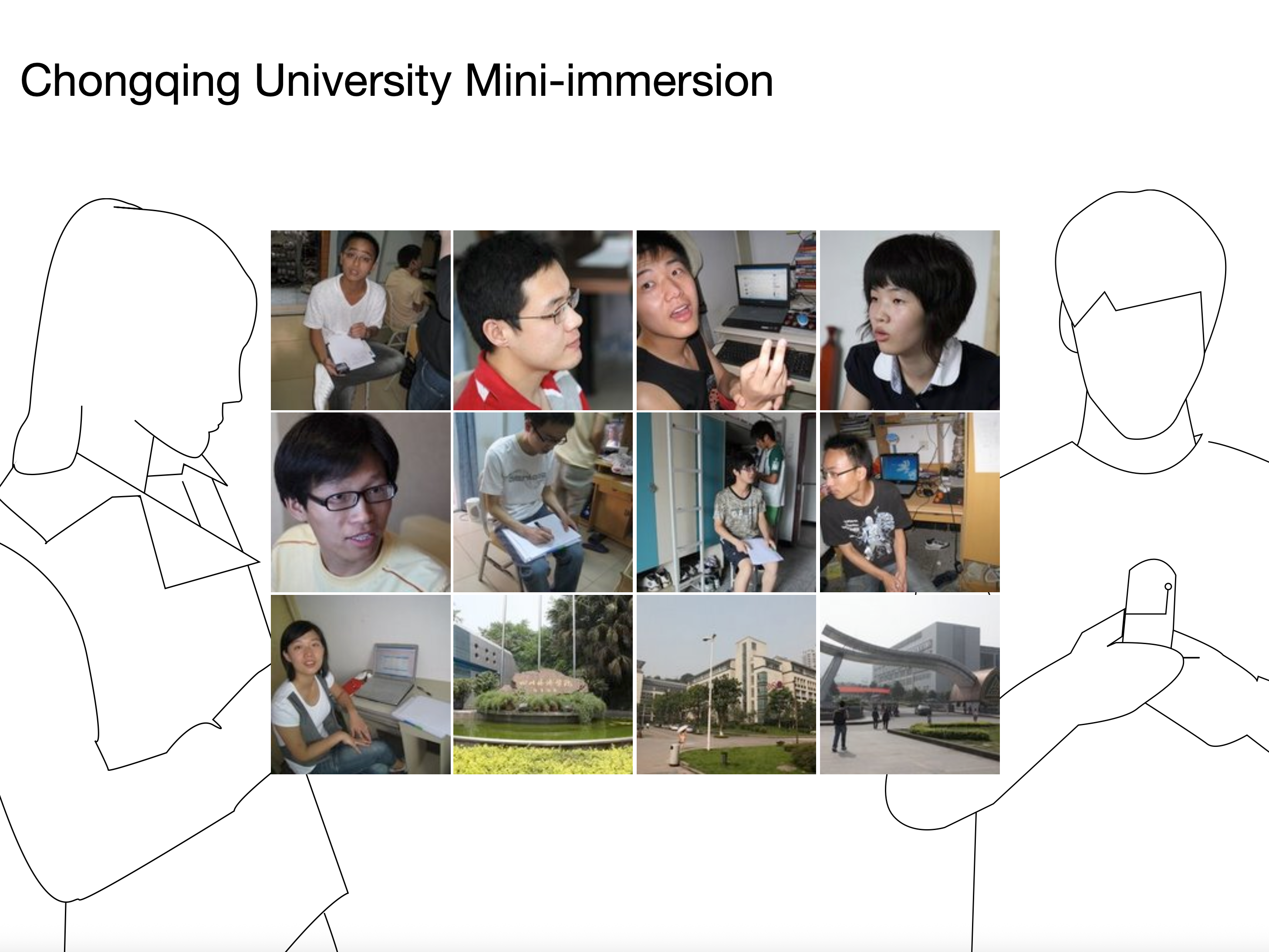
- Chongqing University mini-immersion — a photo mosaic from field research sessions with students on campus. We embedded ourselves in their environment to understand daily rhythms, social dynamics, and how technology fit into their lives.
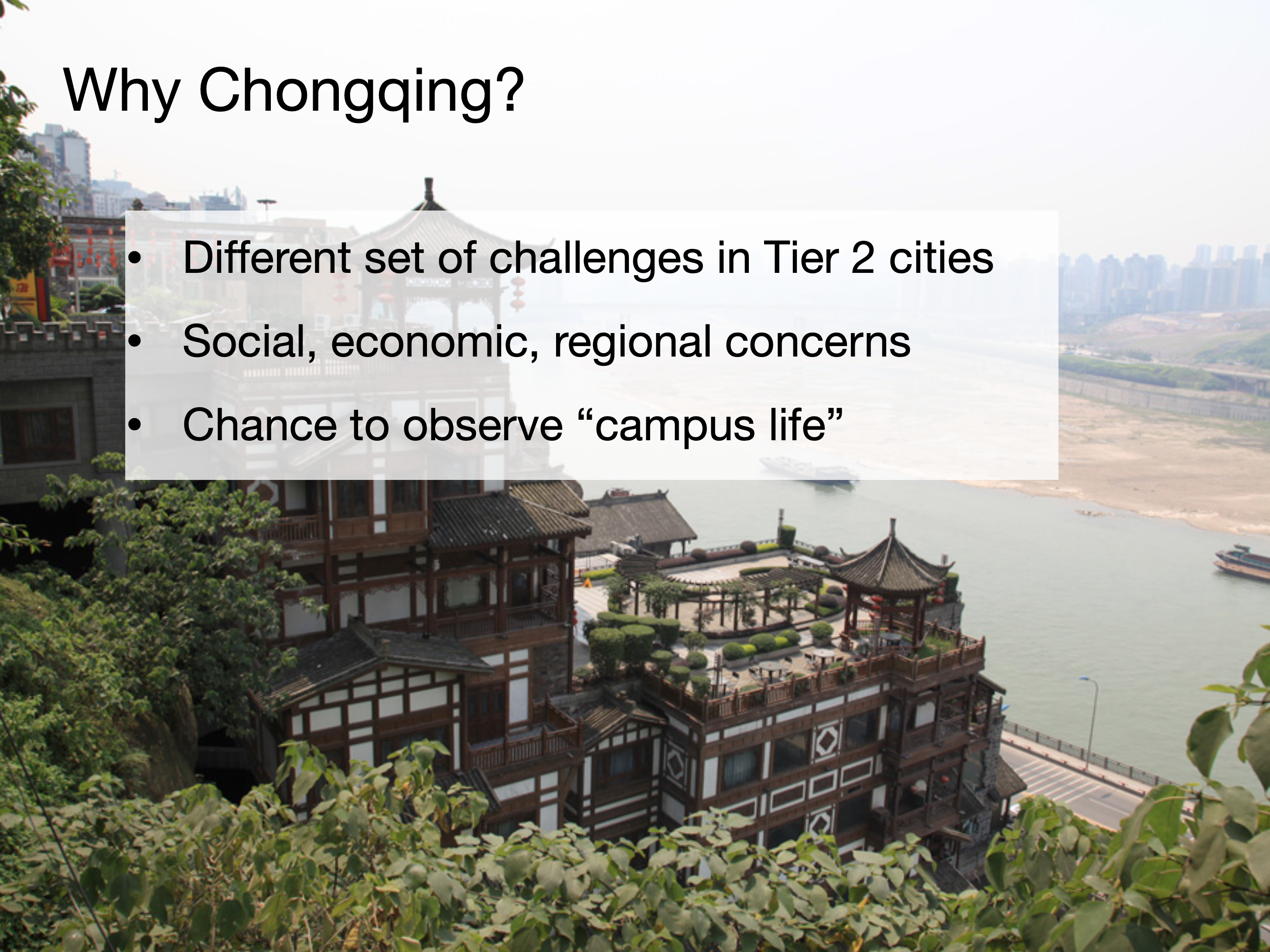
- Why Chongqing? We deliberately chose a Tier 2 city to capture a broader range of student experiences — different economic pressures, regional identities, and campus dynamics than what we'd find in Beijing alone. The Yangtze River riverfront provided an evocative backdrop to a genuinely different slice of Chinese student life.
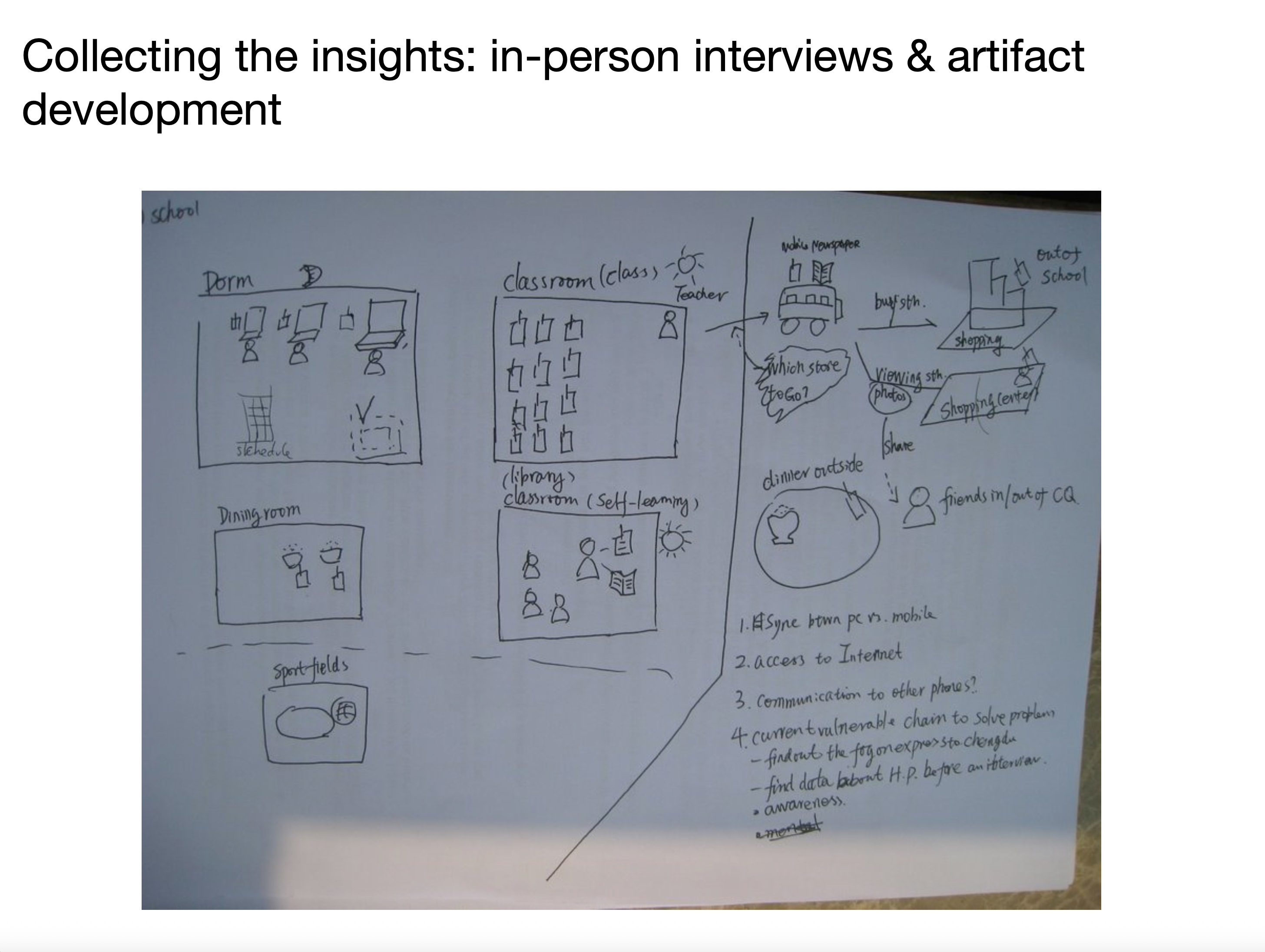
- Field notes and contextual mapping from in-person interviews — hand-drawn artifacts capturing student daily routines, social contexts, and technology pain points. This kind of direct, on-the-ground synthesis was central to how we built empathy with the research population.
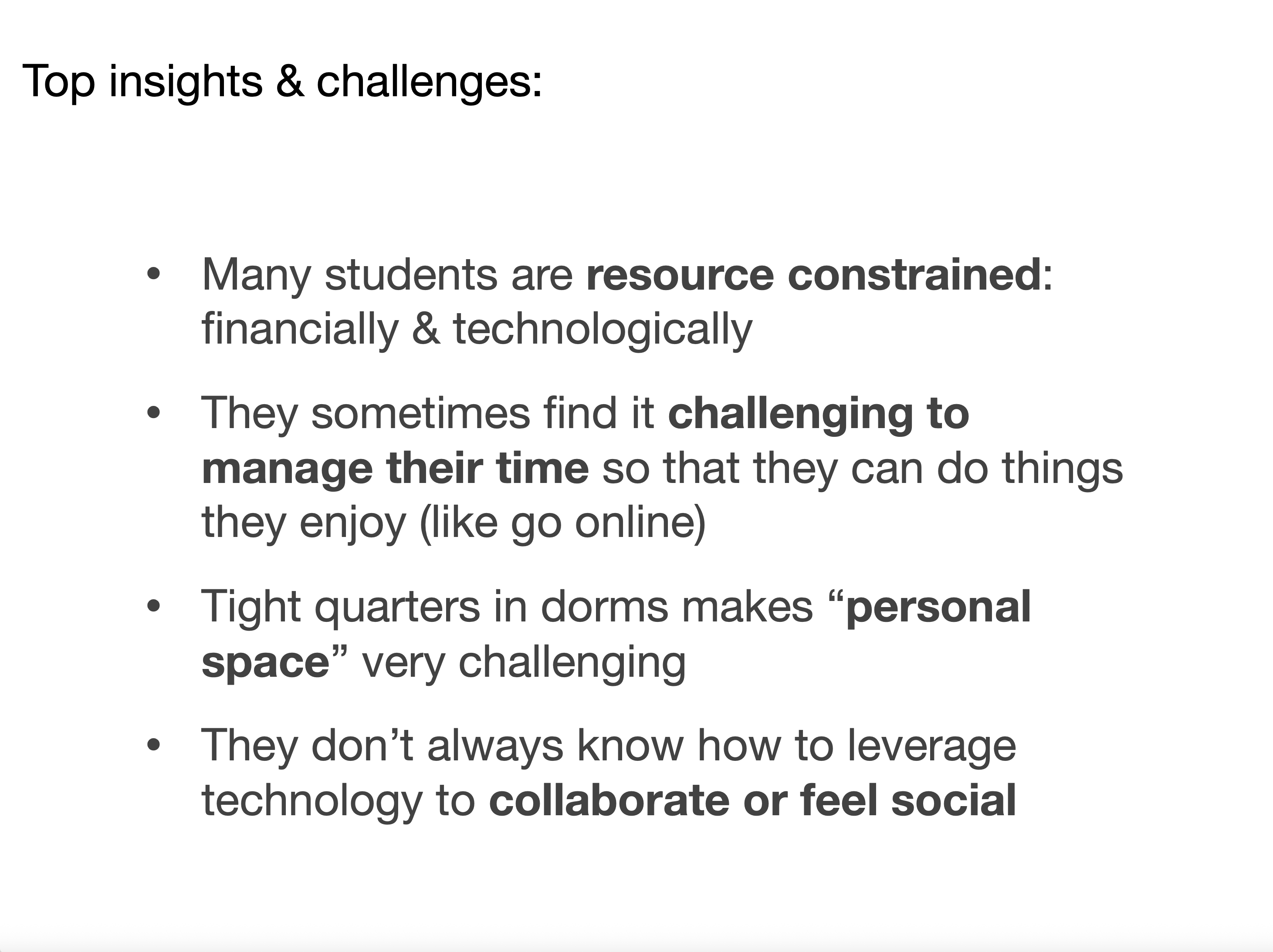
- Top insights from the research: students were resource-constrained financially and technologically, struggled to manage time for online activities they cared about, lacked personal space in crowded dorms, and didn't always know how to use technology to collaborate or feel connected socially.
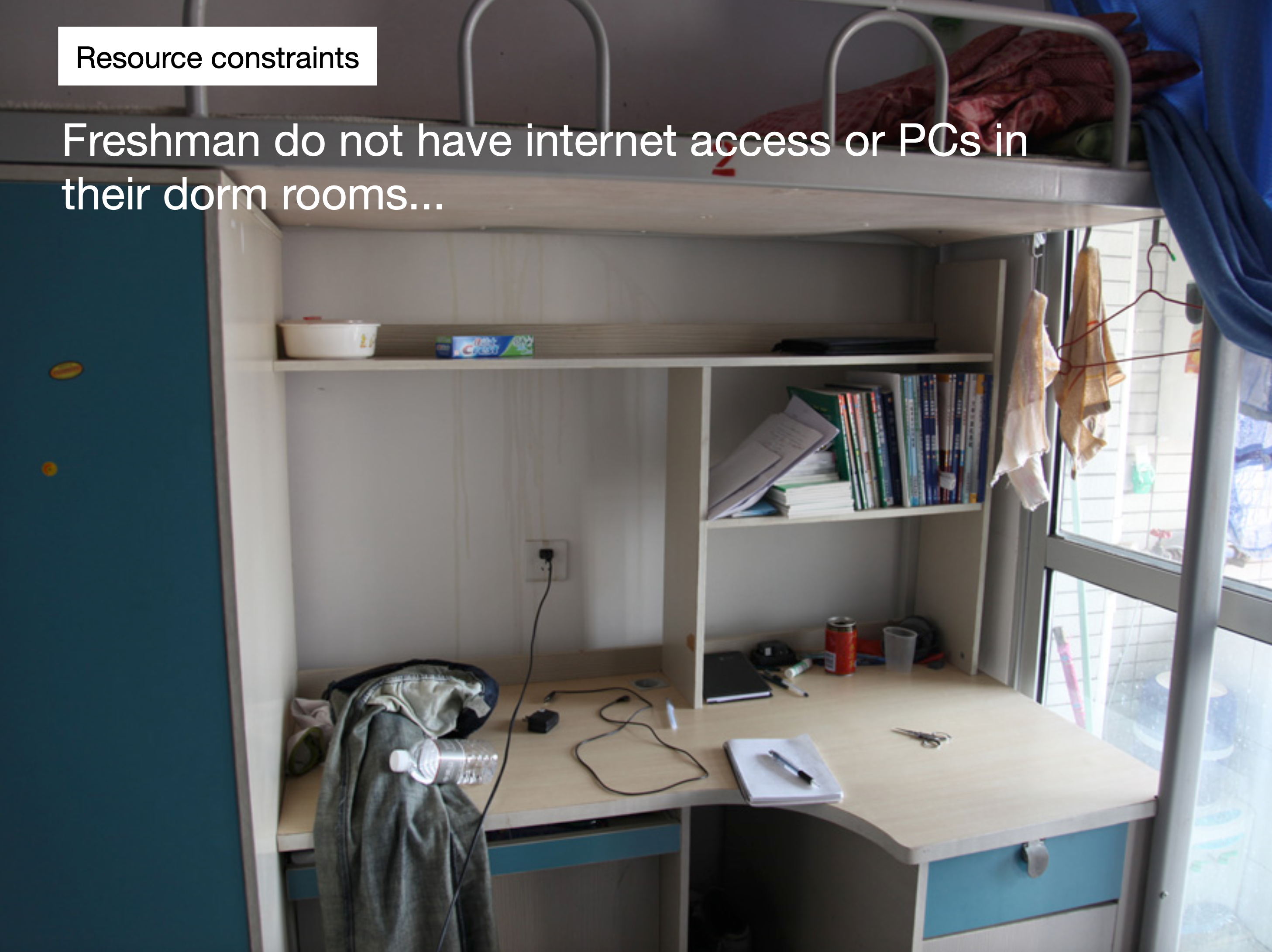
- A first-year student's dorm room — freshmen at many Chinese universities had no internet access or personal computers in their rooms, making mobile phones the primary and often only digital lifeline. This spatial and technological constraint shaped nearly every design decision we explored.
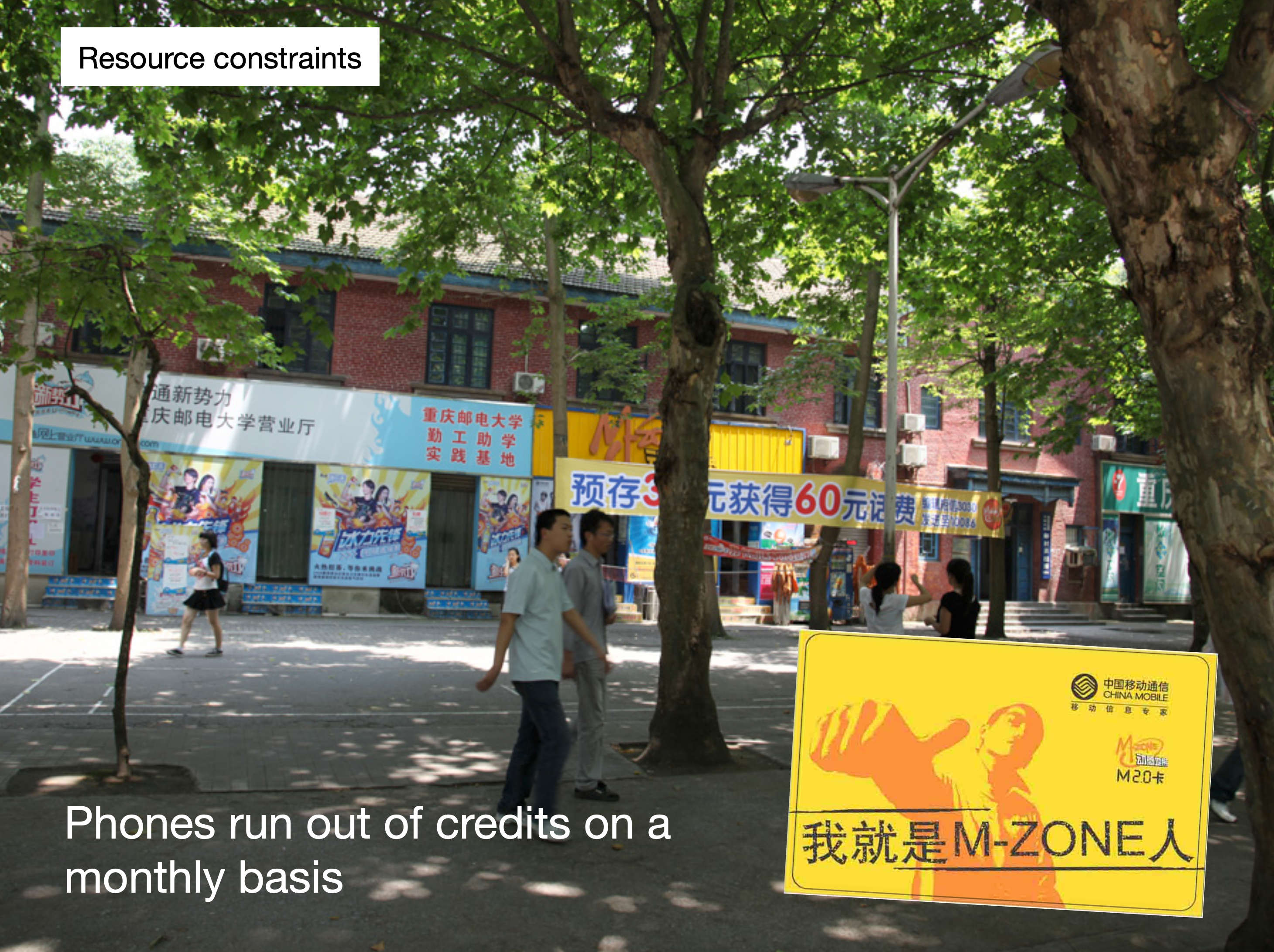
- Campus street scene showing China Mobile's M-Zone branding — the dominant mobile carrier for Chinese students. One of our key research findings: students regularly ran out of mobile data credits mid-month, creating real breaks in connectivity that any Google mobile product would need to account for.
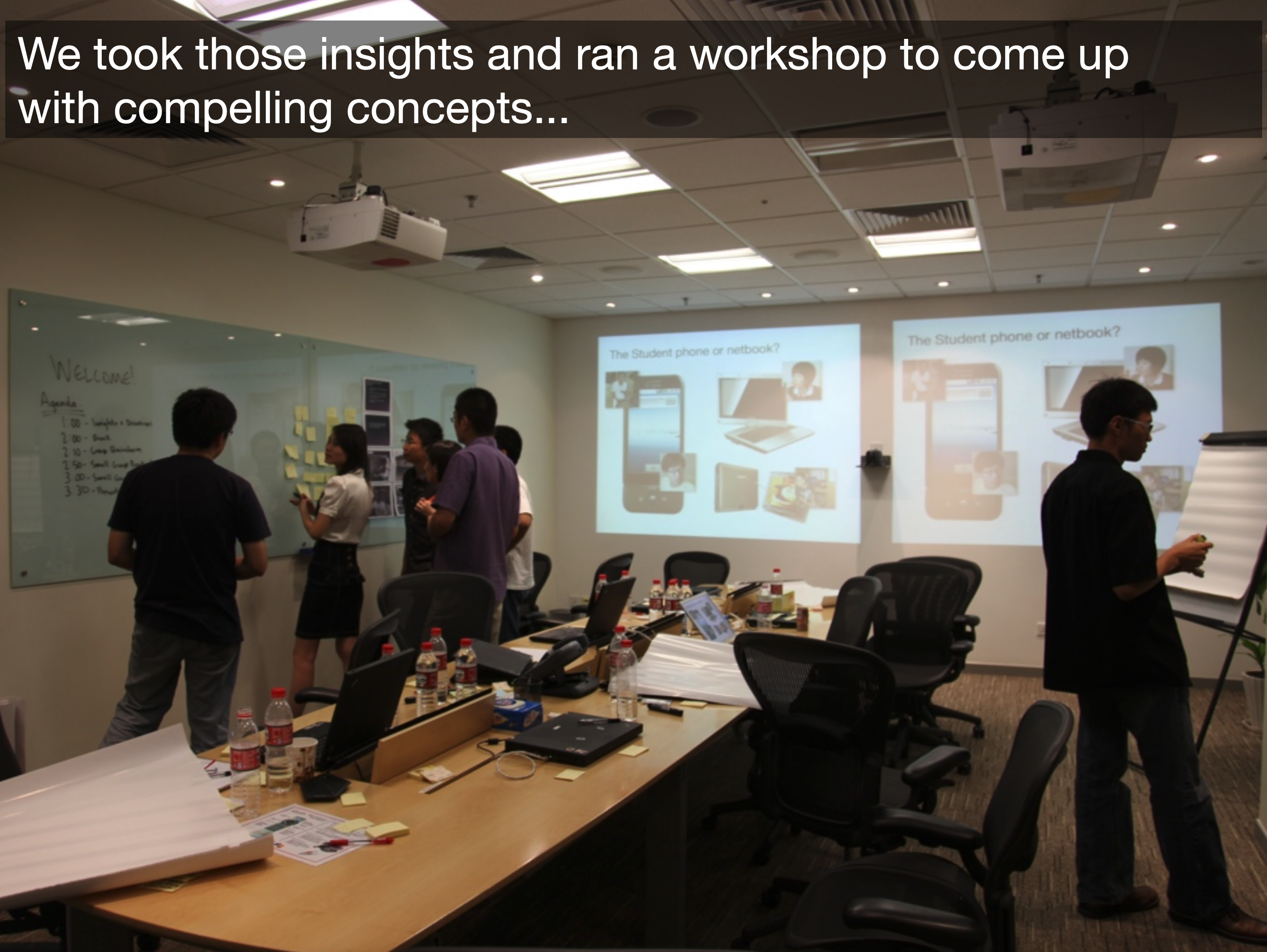
- Cross-functional concept workshop at Google Beijing — where field research was transformed into product directions. I facilitated sessions with the local design team to move from raw insights into prioritized design opportunities, bridging the gap between what we heard from students and what Google could realistically build.
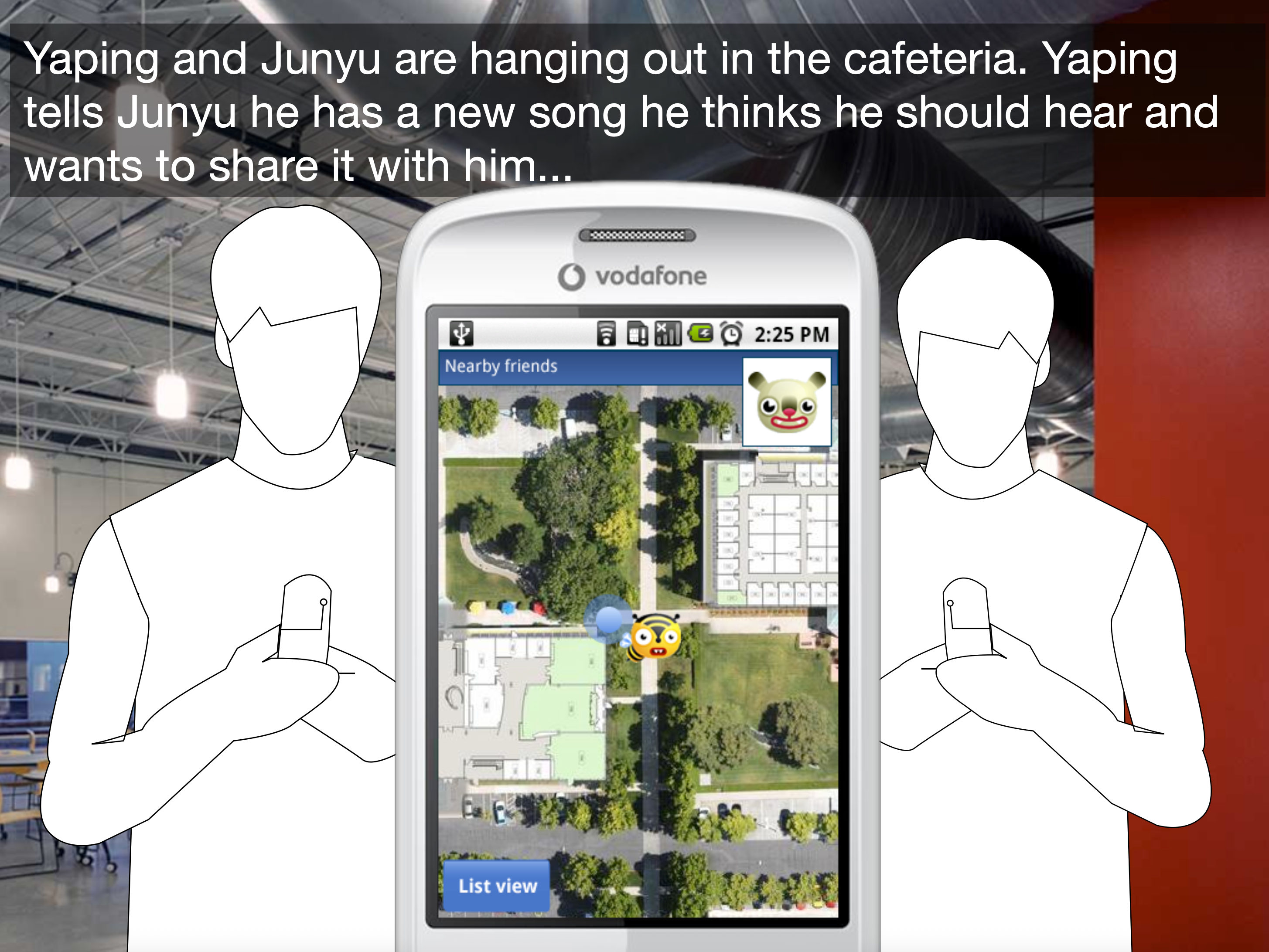
- A concept scenario storyboard illustrating how a social, location-aware mobile experience might work for a student wanting to share music or content with a nearby friend — one of several use case concepts developed directly from research insights about students' desire to collaborate and feel social despite the constraints of campus life.