AI Clinical Care Knowledge Tool
Included Health, 2025 · Case study by Will Dzierson
Tags: Healthcare, Prototyping, LLMs, Machine Learning, AI
My contribution
Design Lead, Prototyping, Design Engineer
The work
Included Health has the unique challenge of having millions of members to cater to across a number of offerings including direct line of site care (primary care), longitudinal health, healthcare navigation, billing support, and many others. The volume of calls and documents (which oftentimes includes a patients' full, unedited medical record) can be overwhelming. This is why the KS (Knowledge System) was developed. So that when a patient calls in, the right answers are at the fingertips of the Customer Care Advocate immediately.
I designed the system to make full use of LLMs and RAG, simultaneously searching millions of documents — both care-related and patient-specific — to surface the right answer in context.
The results were measurable: the system reduced AHT (Average Handle Time) by an average of 1.5 minutes per case, a meaningful cost savings at scale, without compromising the quality of care Included Health is known for.
Images and video
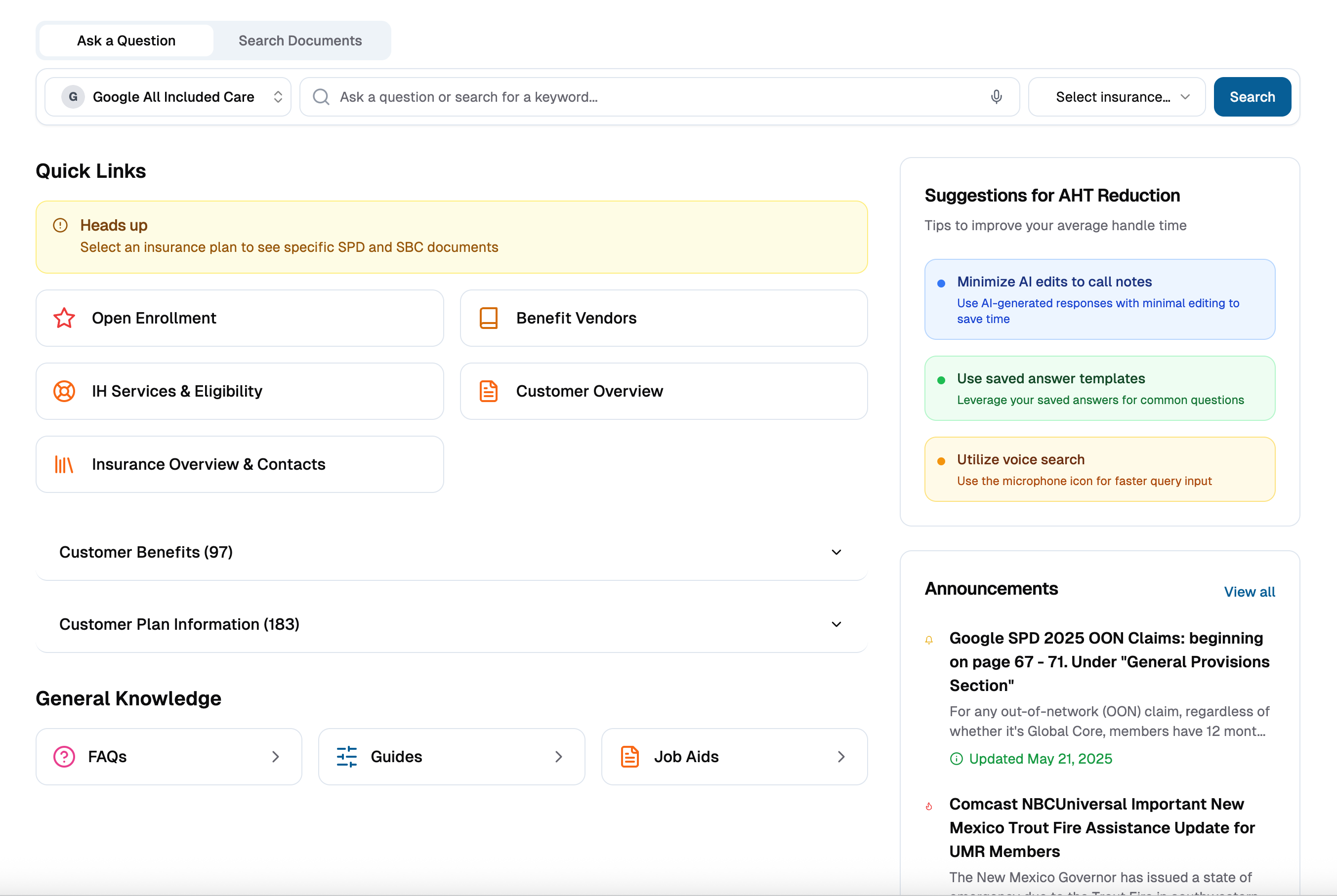
- The KS home view — Quick Links navigation on the left, with AI-powered AHT reduction suggestions and live Announcements in the right panel.
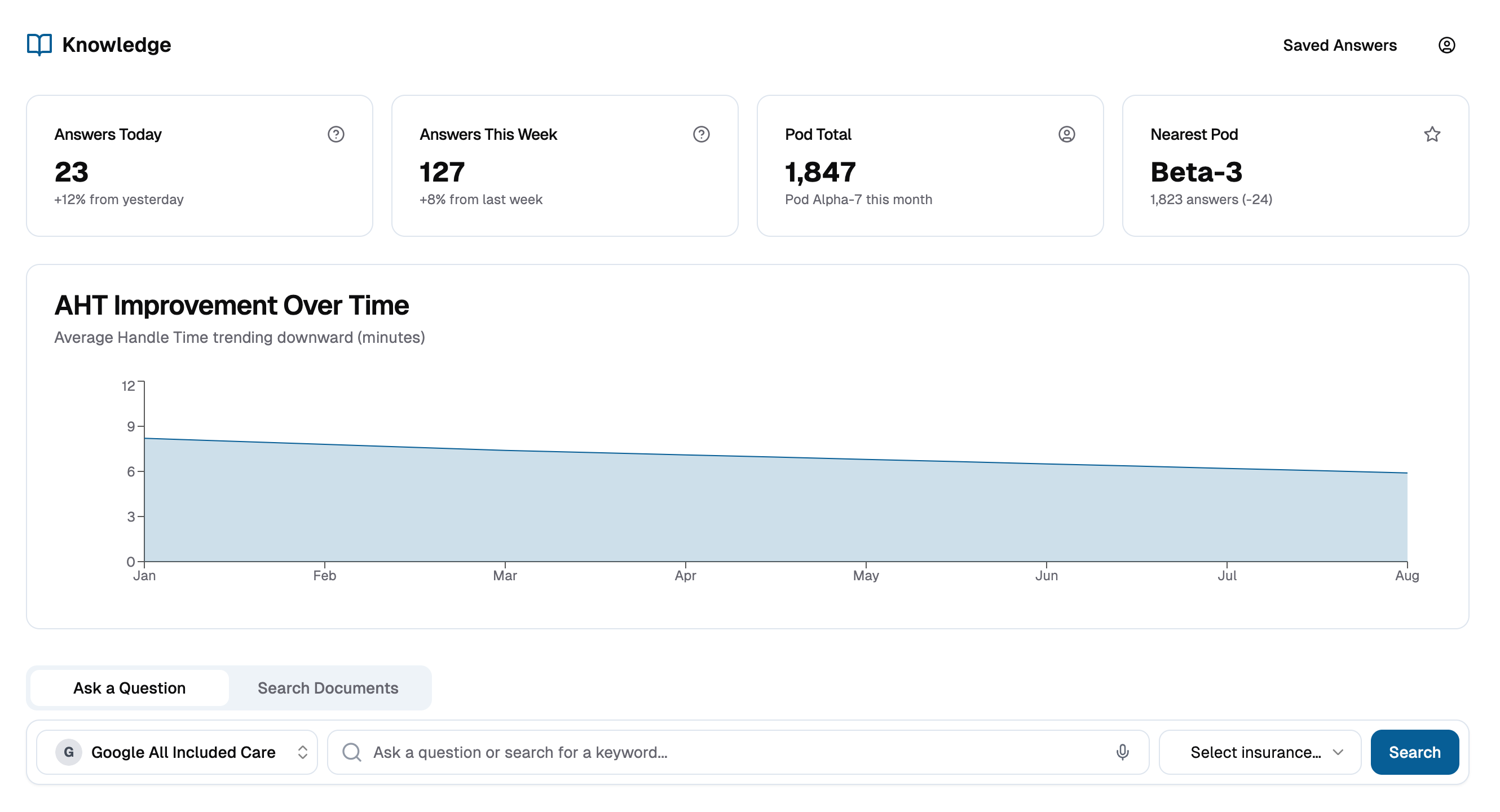
- The KS metrics dashboard — showing real-time answer volume by day, week, and pod, alongside an AHT Improvement Over Time trend chart tracking minutes saved per case.
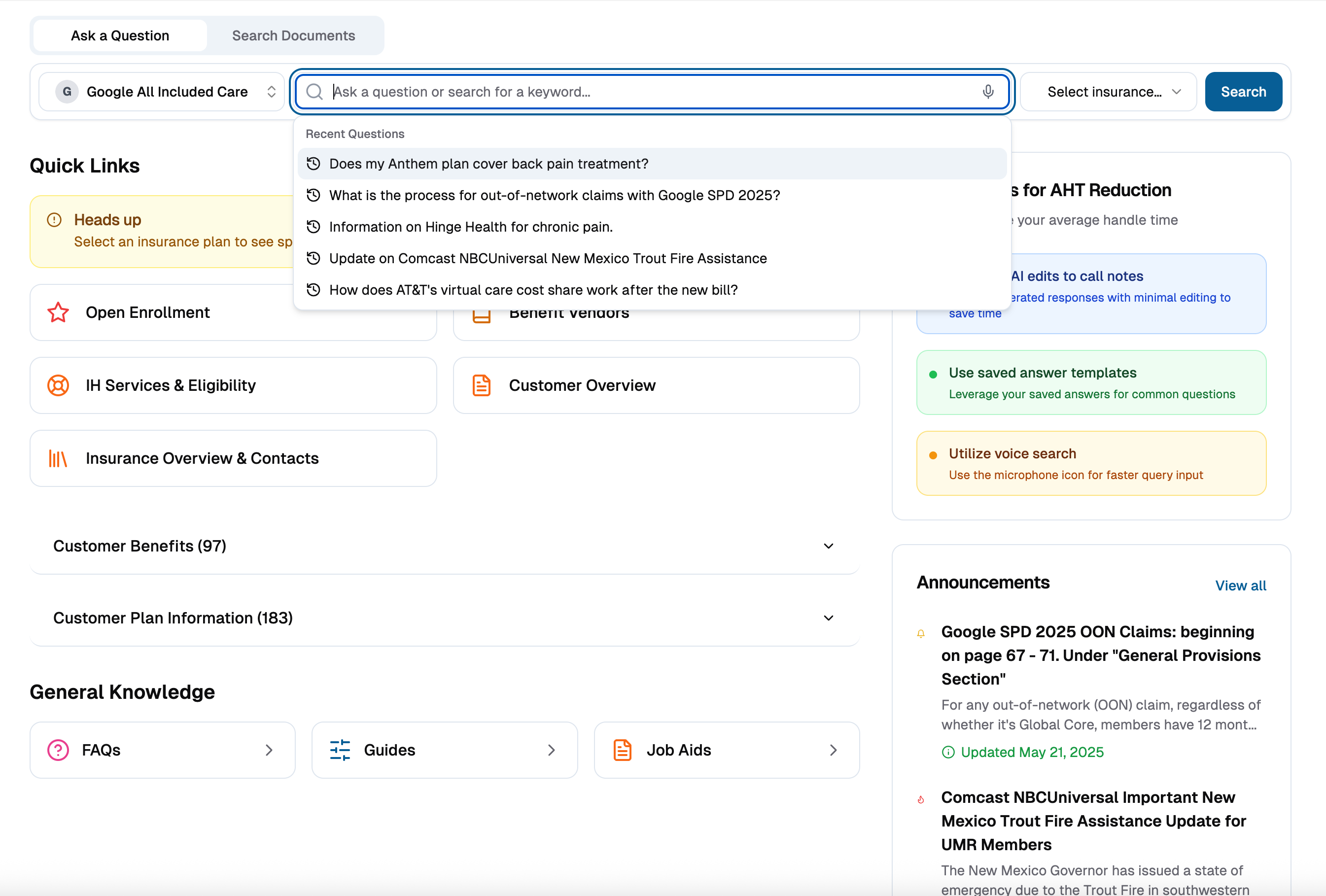
- The search interface with an active Recent Questions dropdown — surfacing contextually relevant queries based on the advocate’s current member and insurance context.
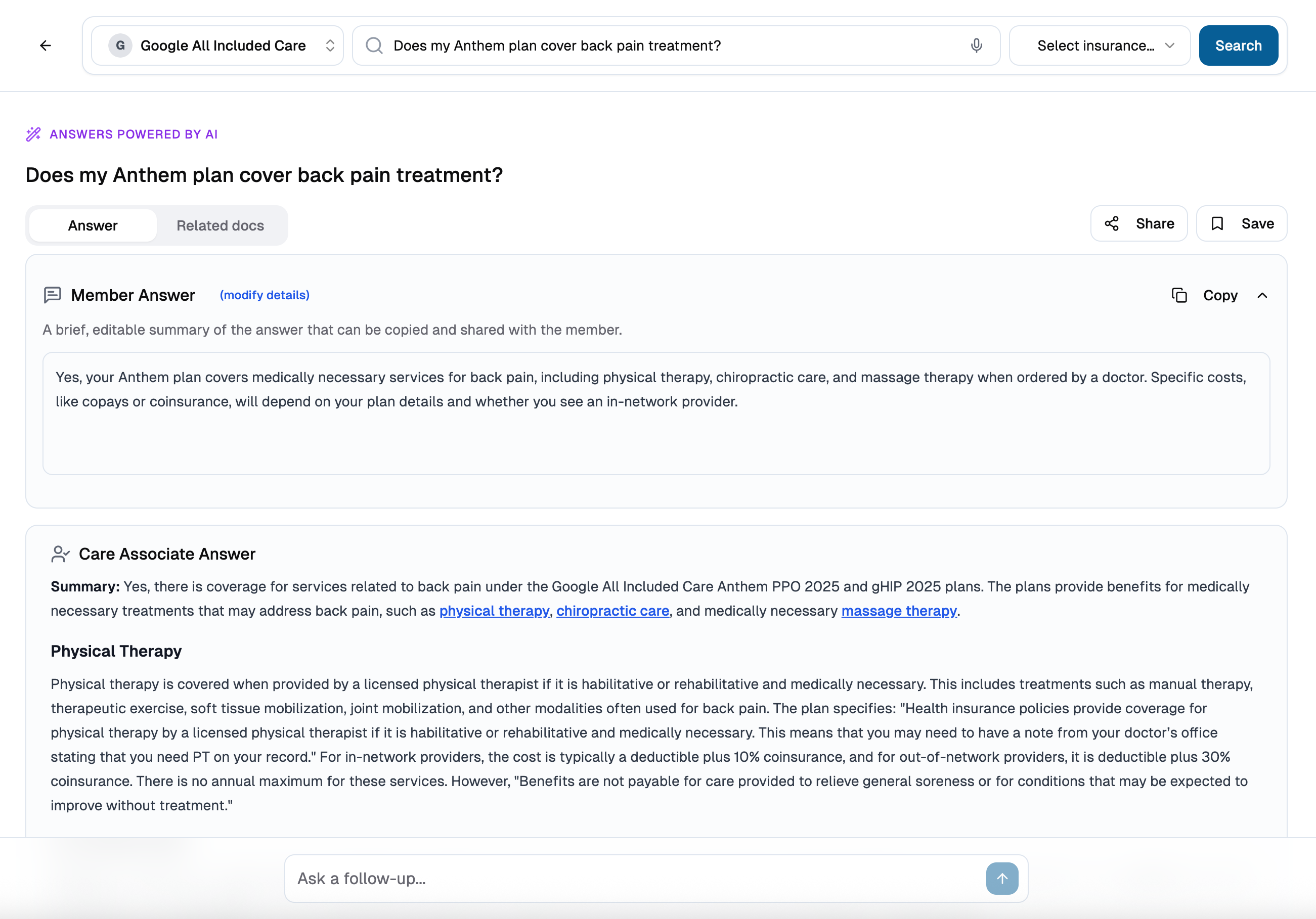
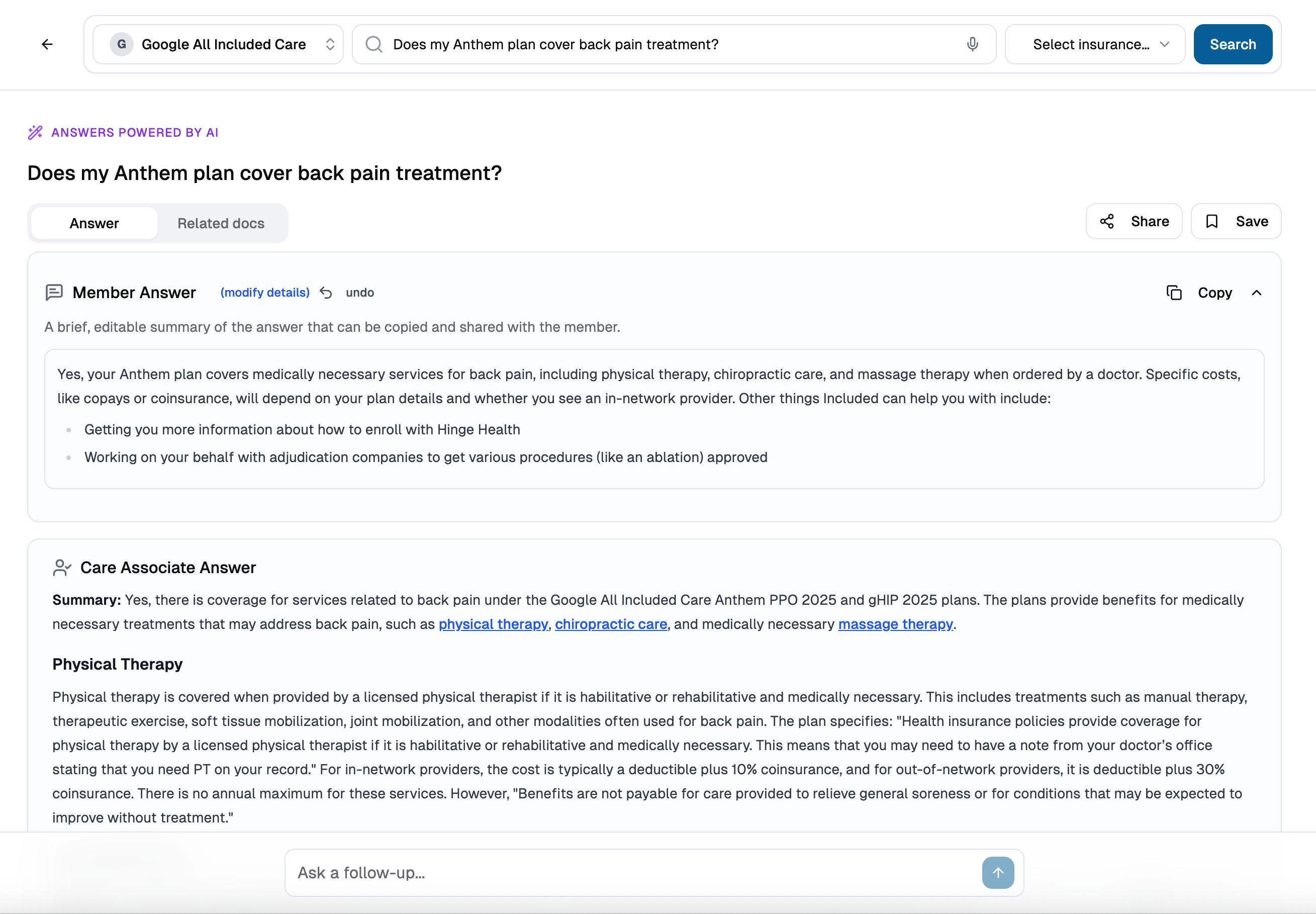
- The AI-powered answer view — showing a Member Answer and a detailed Care Associate Answer side by side, generated in real time from the member’s plan documents and medical record.
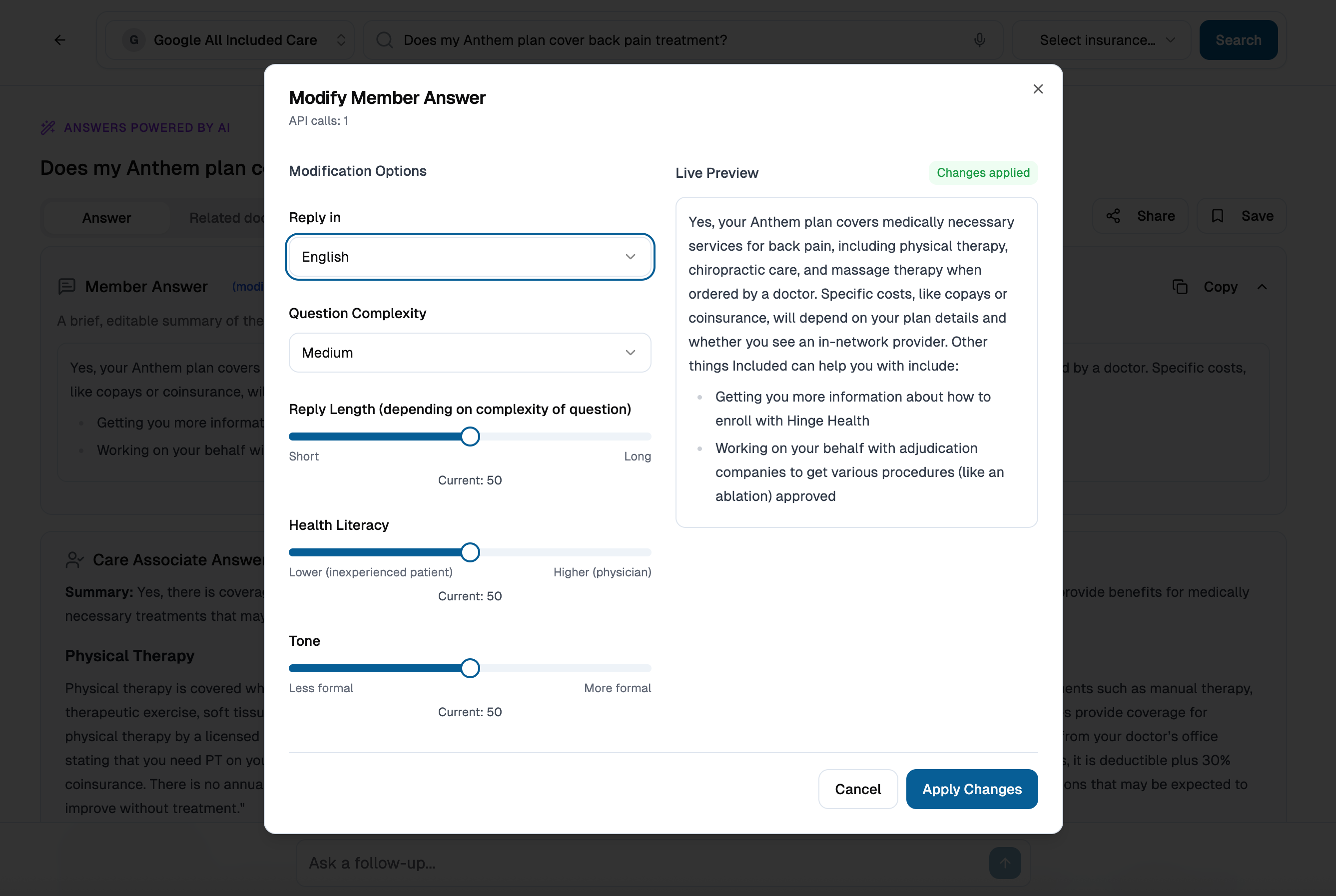
- The “Modify Member Answer” modal — allowing advocates to tailor AI-generated responses by adjusting reply language, question complexity, reply length, health literacy level, and tone before sharing with the member.
- A follow-up interaction in the answer view — with the advocate reviewing treatment coverage and provider options, surfaced contextually from the member’s plan and care history.