Expert Physician Care Portal
Grand Rounds (Now Included Health), 2025 · Case study by Will Dzierson
Tags: UX, Prototyping
Project link: https://www.includedhealth.com
My contribution
I served as Lead Designer, owning the project from initial research through final delivery. That meant running the user research myself — conducting field observations and in-depth interviews with practicing physicians, internal operations staff, and clinical reviewers to build a grounded understanding of how specialists actually approach a second-opinion case.
From there, I developed the IA and interaction model for the redesigned interface, working through multiple rounds of rapid prototyping to validate patterns with the clinical users before anything was handed to engineering. Key design decisions included modular record views that let experts control their own review sequence, progressive disclosure to manage the density of patient history data, and inline evidence tagging that allowed physicians to annotate and reference specific findings directly within their report workflow.
I worked in close collaboration with data scientists and engineers throughout the build — staying embedded in the development process to ensure the implementation held fidelity to the design intent. The clinical precision of the output depended on it.
The work
Grand Rounds (now Included Health) was built on a compelling but operationally demanding premise: connect patients facing serious diagnoses with the country's top medical specialists for expert second opinions. The bottleneck wasn't finding the experts — it was giving them a tool worthy of their time and clinical rigor. The internal Expert Interface had grown organically and wasn't keeping pace with the complexity of the cases coming through.
I led the end-to-end redesign of the Expert Physician UI — the primary workspace where specialists reviewed patient records, formed clinical opinions, and authored second-opinion reports. The platform served physicians at the top of their fields: orthopedic surgeons, oncologists, cardiologists, and neurologists reviewing cases that often had significant treatment implications for the patient. Getting the UX wrong wasn't just an efficiency problem — it risked degrading the quality of the clinical output itself.
The work began with deep user research: field observations, workflow interviews, and heuristic analysis with clinicians and internal operations staff. What emerged was a clear picture of where the interface was fighting expert cognition rather than supporting it — fragmented record navigation, poor information hierarchy, and no tooling to help experts quickly synthesize complex multi-document patient histories. The redesign addressed each of these systematically, introducing modular record views, progressive disclosure patterns, and inline evidence tagging that mapped to how specialists actually think through a case.
The redesigned platform measurably improved expert satisfaction and reduced time-to-completion for second-opinion reports, helping Grand Rounds scale its medical insight services without sacrificing clinical depth or quality.
Images and video
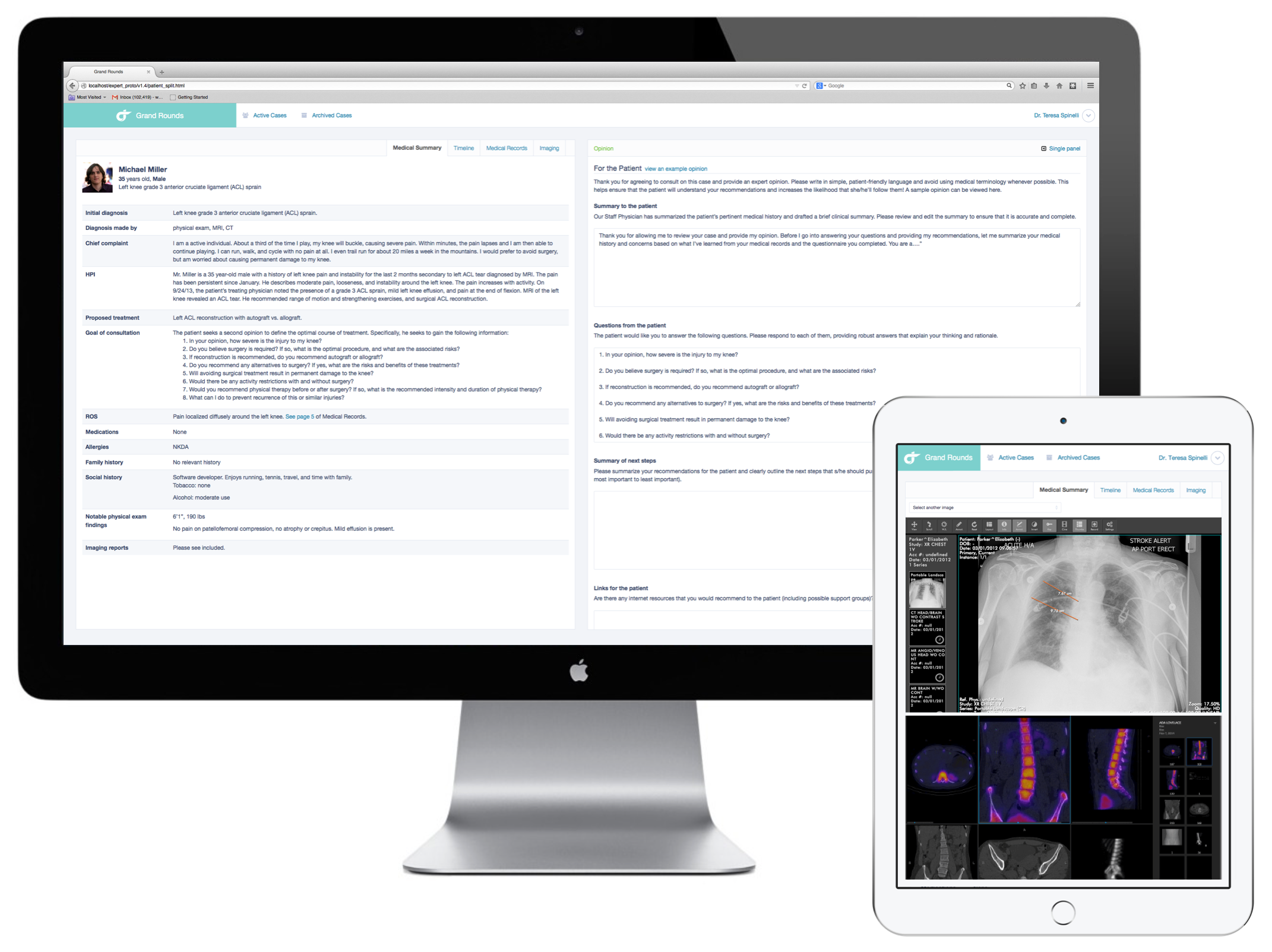
- The redesigned Expert Physician Interface — the primary workspace where top-tier medical specialists review patient records and compose second-opinion reports. The desktop view shows the full patient case with structured medical history, while the tablet view surfaces the integrated medical imaging viewer for radiological review alongside the record.
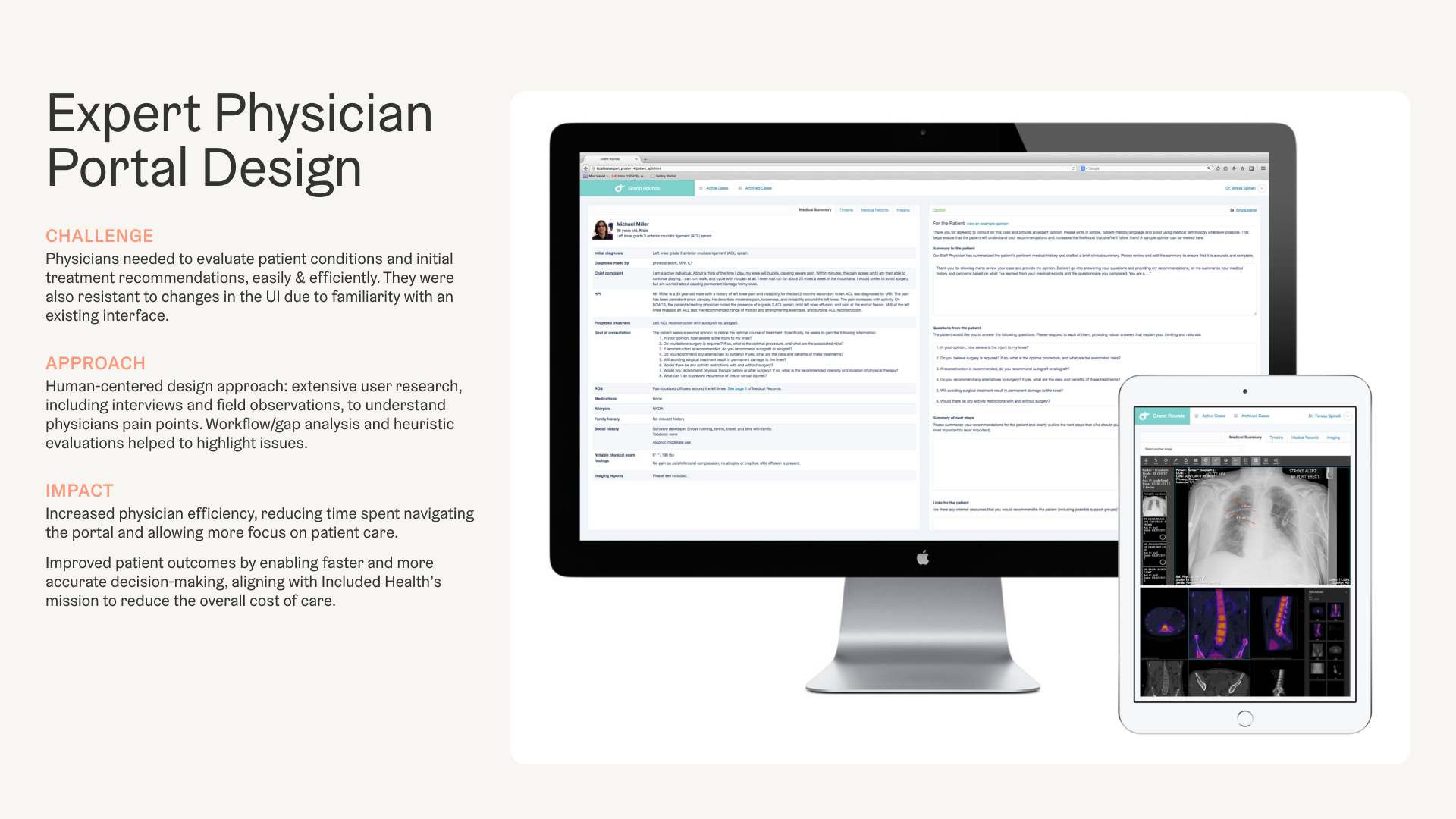
- A summary slide framing the design challenge, approach, and impact for the Expert Physician Portal redesign. Physicians needed to evaluate complex patient conditions quickly and efficiently but were resistant to interface changes due to familiarity with the existing tool. A human-centered, research-led approach — grounded in field observations and workflow analysis — drove the redesign toward measurably better physician efficiency and patient outcomes.
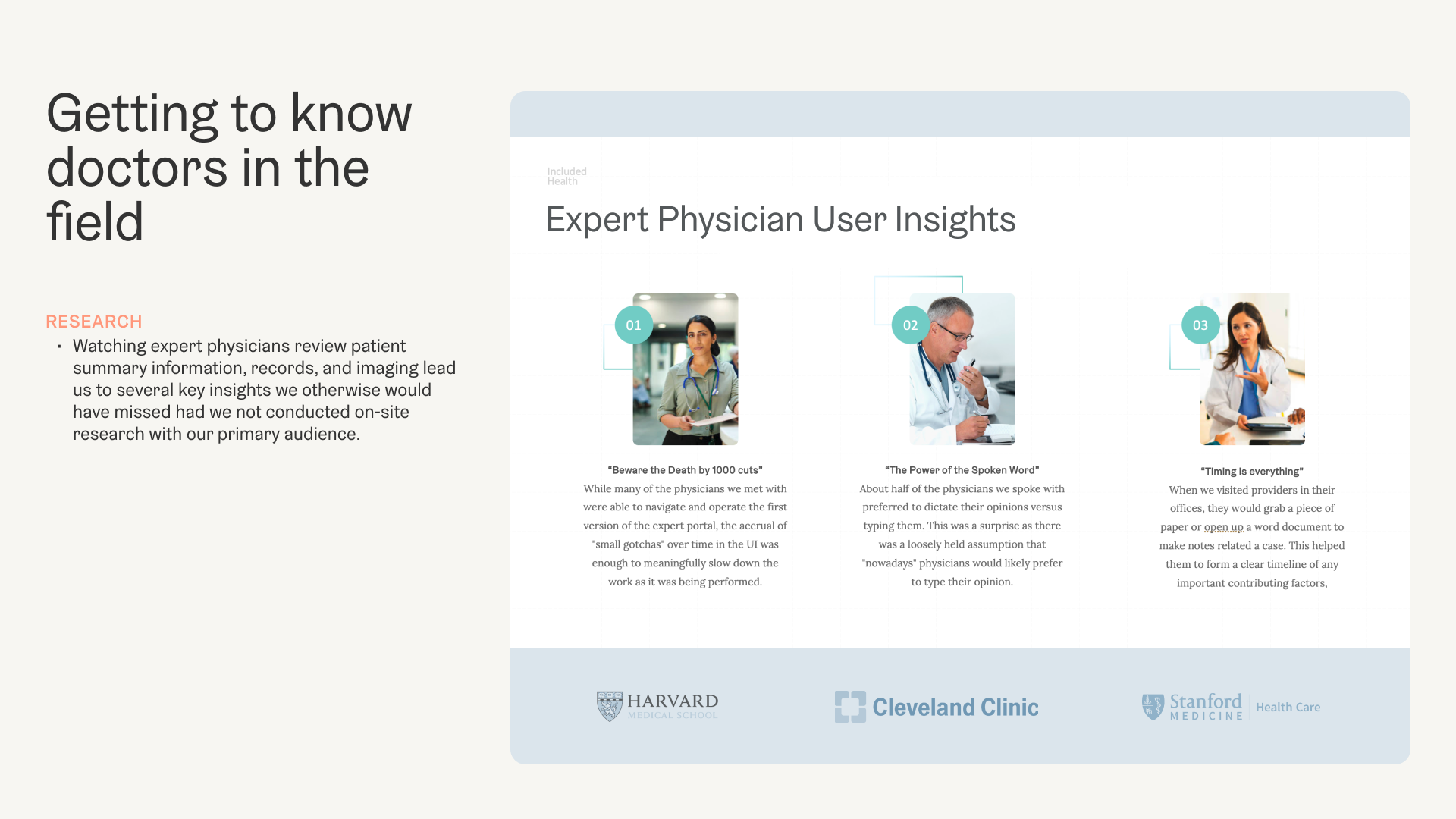
- User research output from the field research phase — Expert Physician User Insights. I conducted direct interviews and observations with active specialist physicians to understand their clinical workflow, their mental models when reviewing patient cases, and the specific failure modes of the existing interface. This research directly shaped the information hierarchy and interaction patterns of the redesign.
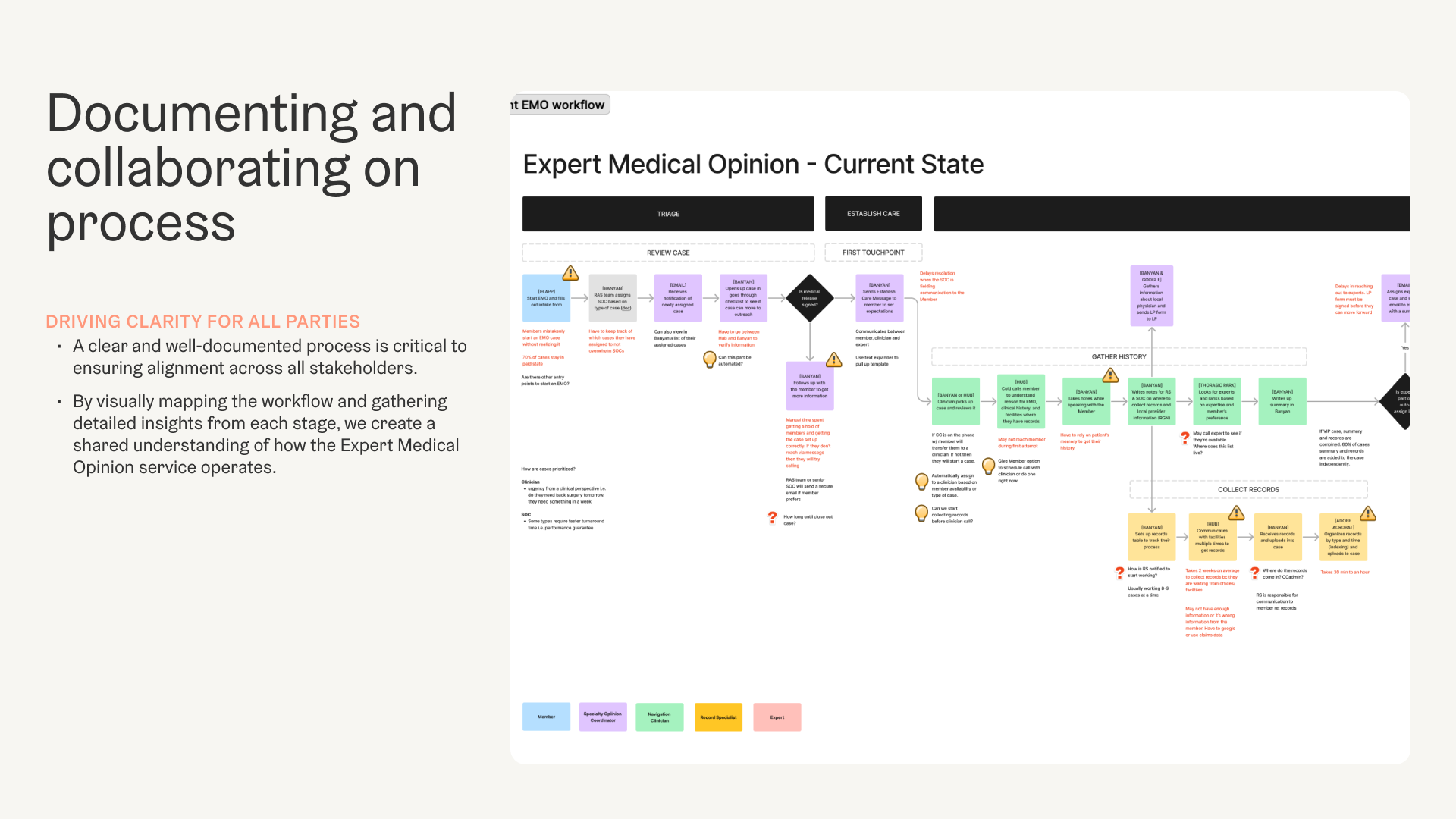
- Workflow documentation and current-state mapping for the Expert Medical Opinion process — capturing how cases moved through the system before the redesign. This artifact was developed collaboratively with operations staff and physicians during the research phase, and served as the foundation for identifying the biggest gaps between what the workflow demanded and what the tool supported.
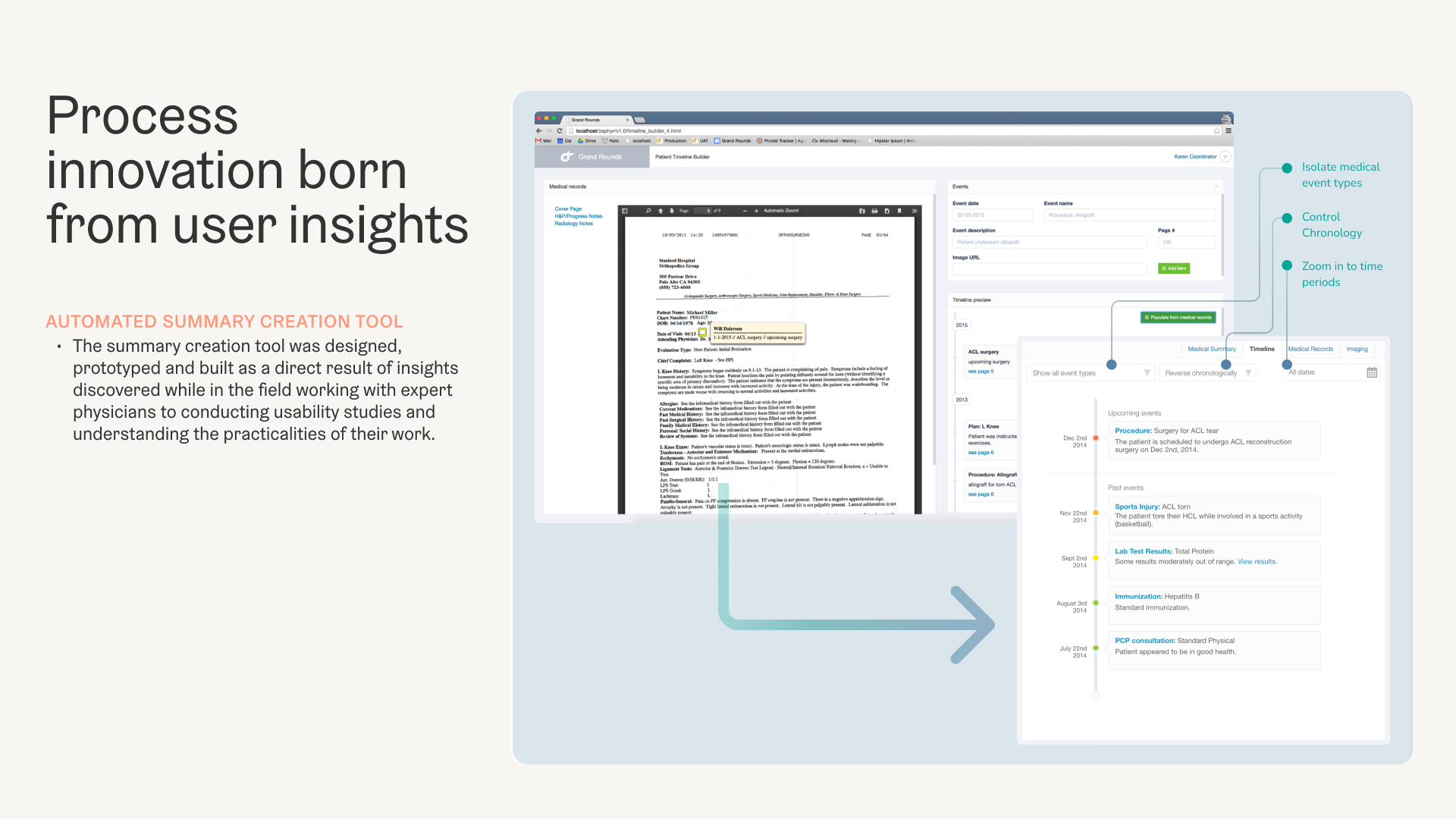
- A design concept for the Automated Summary Creation Tool — one of the key process innovations that emerged directly from user research. Physicians cited the time required to manually synthesize patient records as a top pain point. This tool was designed, prototyped, and built as a direct response to that insight, automatically generating structured summaries from patient history to let experts focus their cognitive effort where it matters most.
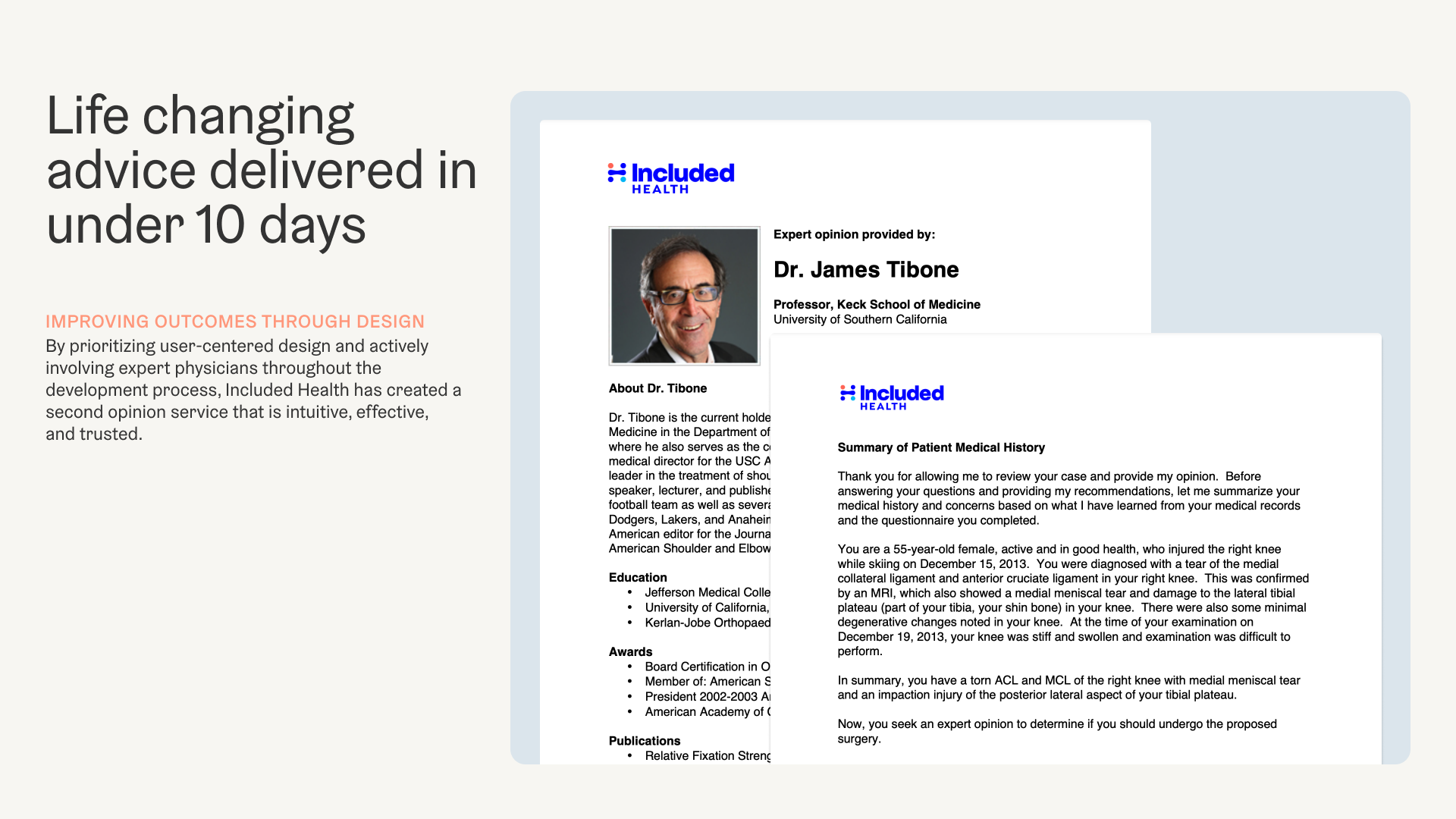
- The end output of the Grand Rounds Expert Physician platform — a polished, patient-facing second opinion report authored by Dr. James Tibone, Professor at the Keck School of Medicine at USC. This is the artifact the entire physician workflow is designed to produce: a clear, credible, and actionable expert opinion delivered to the patient within 10 days. The quality and usability of the Expert Physician UI directly determines the quality of this report.