GenSynth ML Explainability Tool
Darwin AI, 2019 · Case study by Will Dzierson
Tags: UX, Prototyping, Machine Learning, AI
My contribution
Principal Designer. I led UX research, interaction design, prototyping, and visual design for the project, mapping the ML workflow and shaping the core explainability and performance-analysis experience in close collaboration with the DarwinAI team.
The work
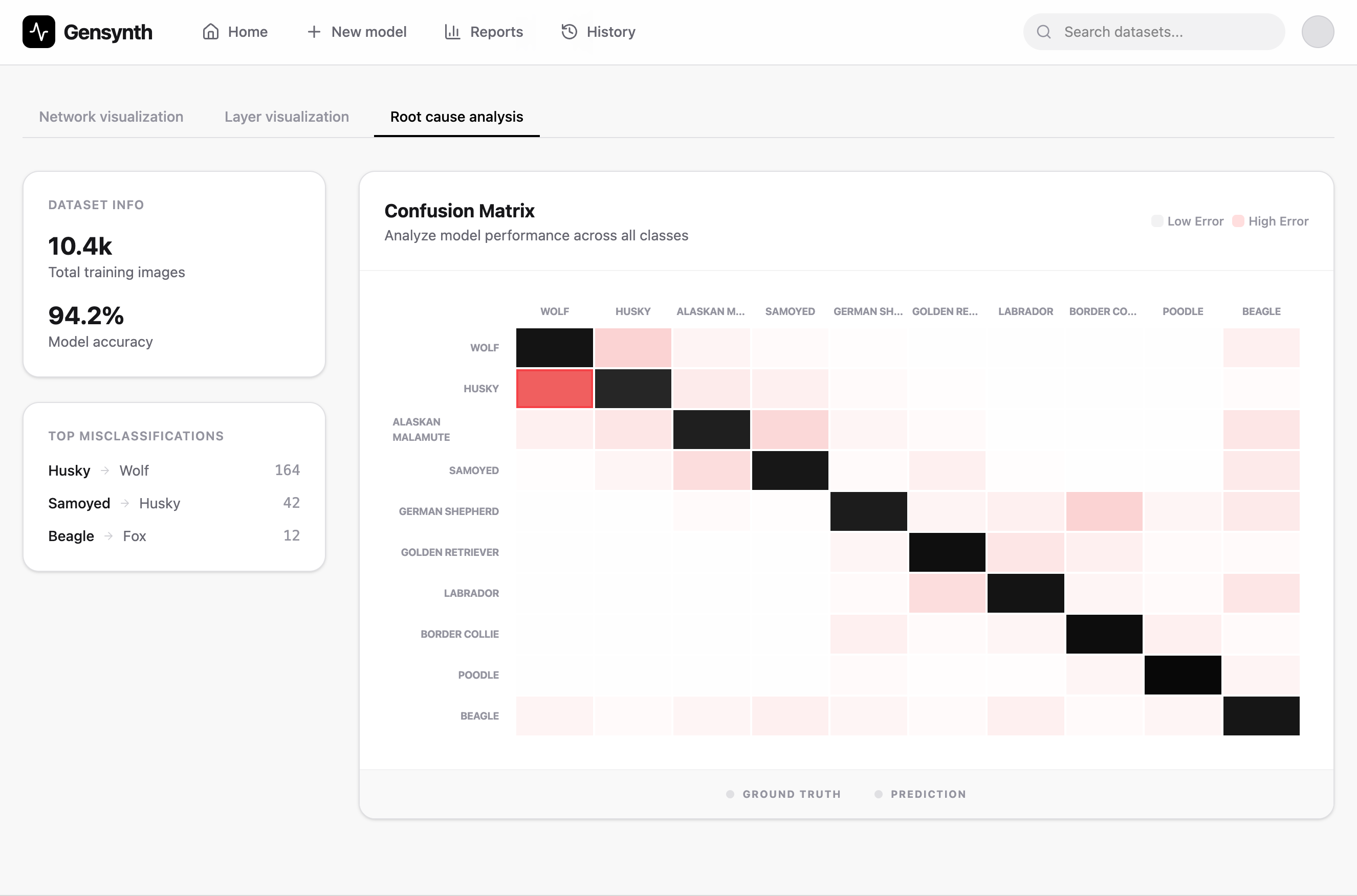
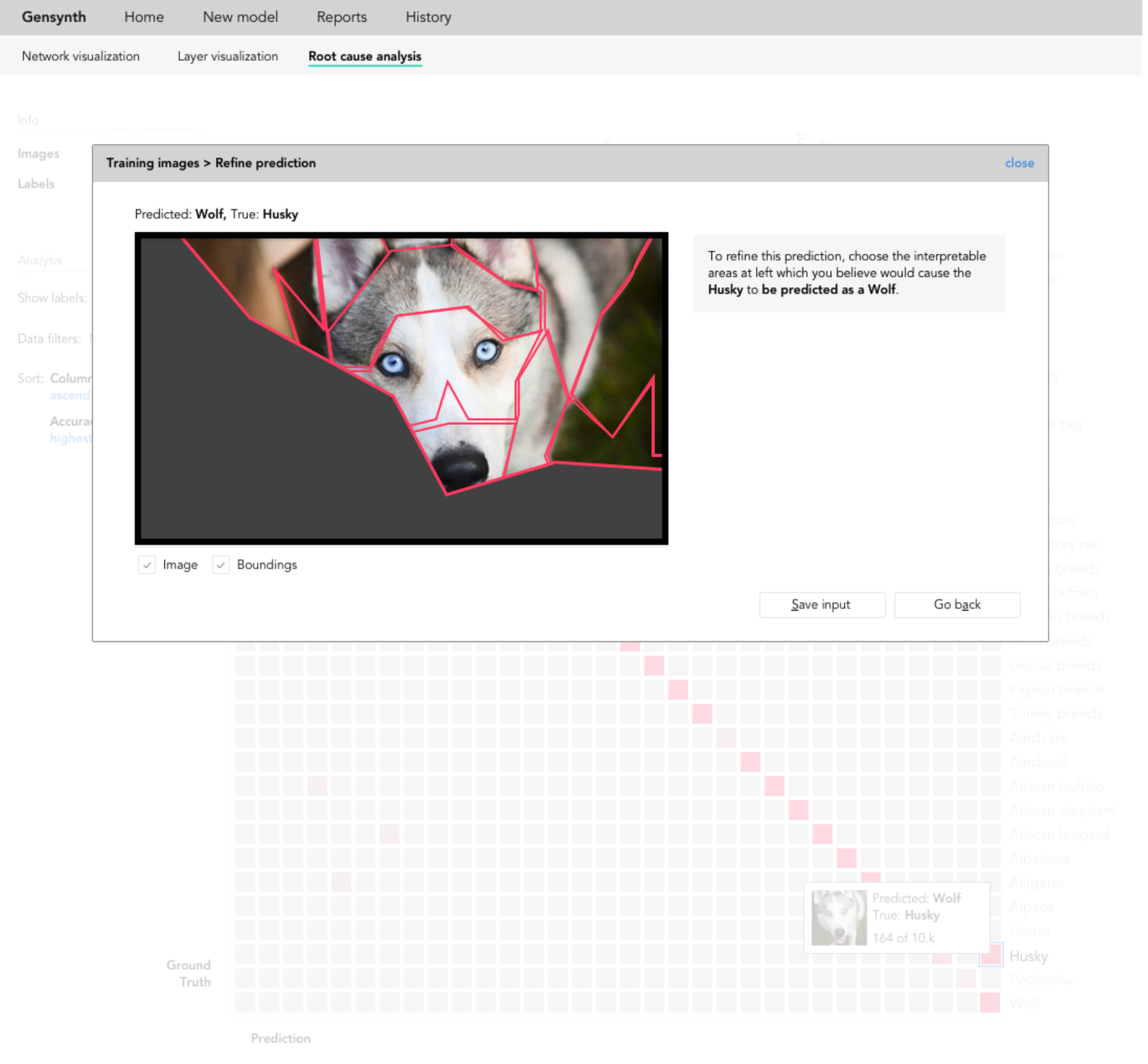
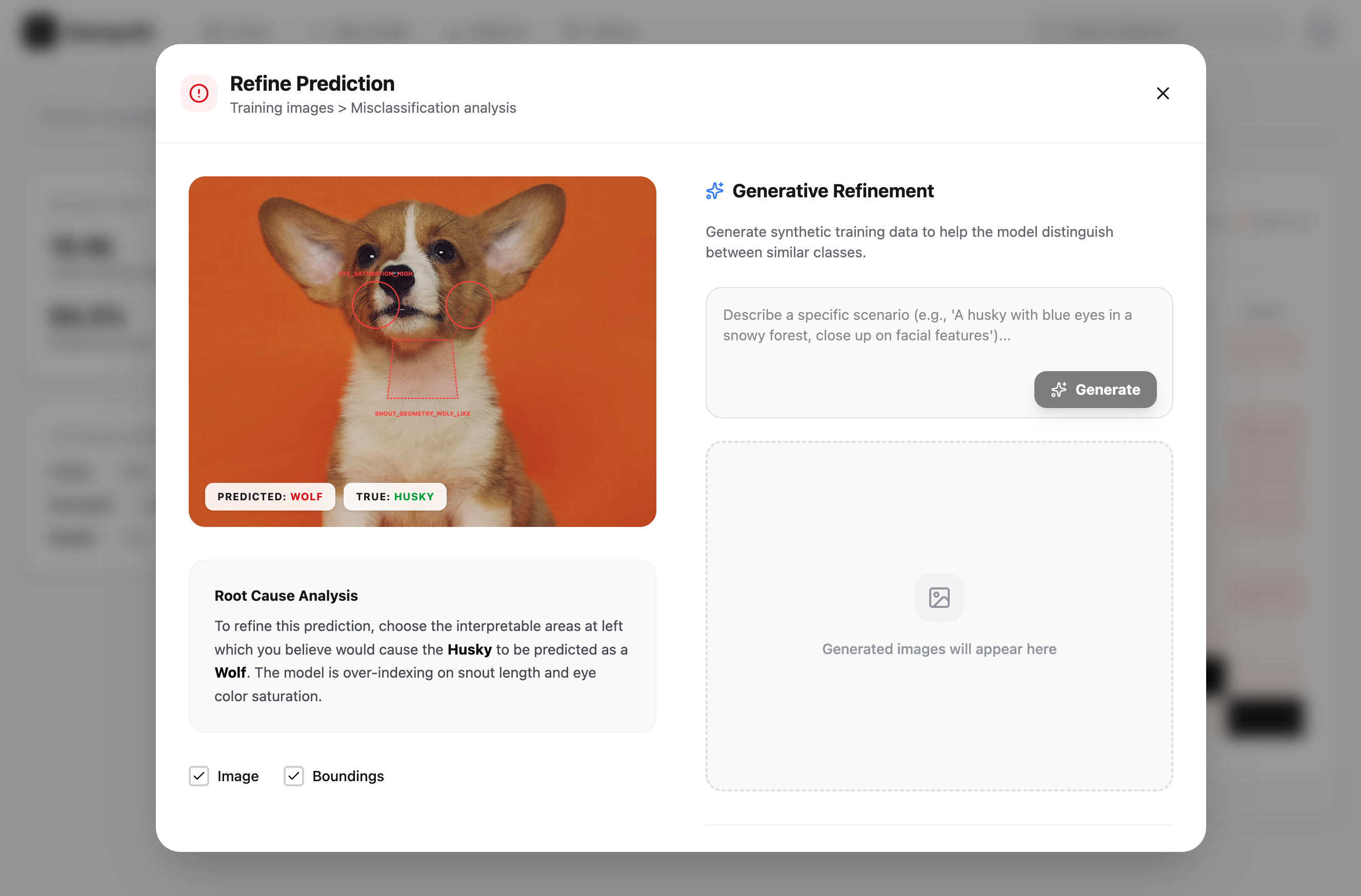
DarwinAI’s GenSynth platform was built to address the deep learning “black box” problem by making convolutional neural networks more transparent and more efficient. For this project, I designed an interface that helped ML practitioners define confusion matrices, inspect misclassified samples, and trace how CNNs learned from training images, with a particular focus on self-driving vehicle perception workflows.
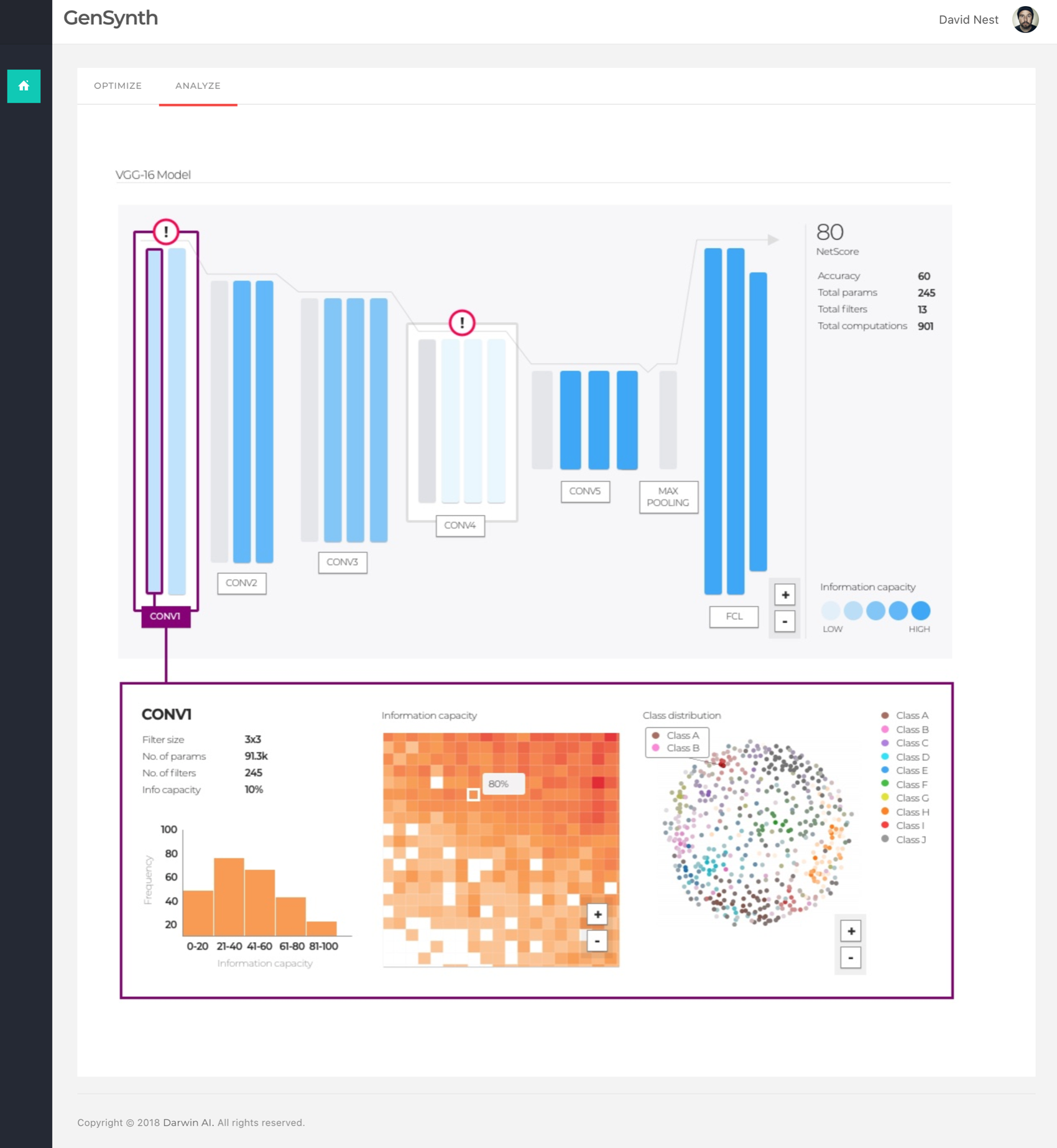
The experience surfaced neuron- and layer-level signals that made it easier to understand which features were driving specific decisions, identify bias and edge cases, and refine models through iteration rather than treating them as opaque systems. The result was a more usable environment for exploring experiments, comparing model variants, and moving toward compact, high-performing networks suitable for real-time edge deployment in safety-critical contexts.
Images and video
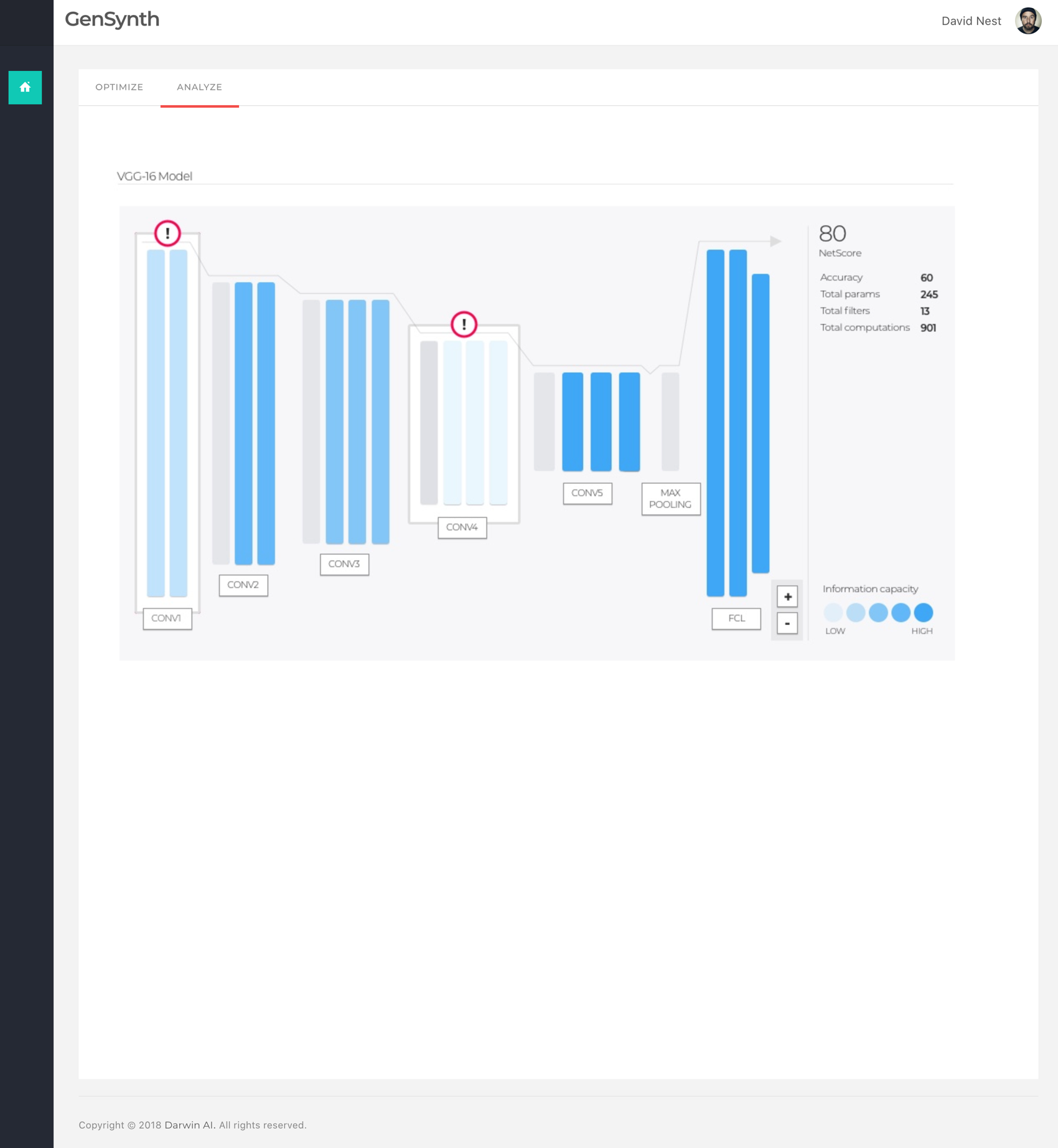
- GenSynth overview interface, showing the primary workspace for exploring model behavior and explainability outputs.
- Confusion-matrix and misclassification analysis view, designed to help practitioners isolate failure patterns and edge cases.
- Layer- and neuron-level inspection view, revealing the internal signals contributing to model predictions.
- Experiment comparison workflow, supporting review of model variants and tradeoffs between accuracy, interpretability, and deployment efficiency.
- Model analysis detail view, helping teams connect training data, activations, and prediction outcomes in a single workflow.